
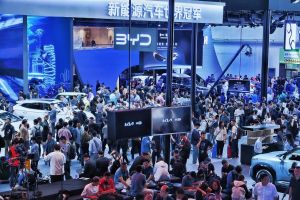
Auto China 2026 promises to be milestone event
Auto China 2026 marks another milestone in the evolution of an event that has tracked China’s rise from emerging market to global automotive powerhouse.
- Industry News
- 16 April 2026
One cannot attend an SA auto industry event without captains of industry, thought leaders and other stakeholders bemoaning the lack of political will to create a fertile policy framework for the introduction of new energy vehicles (NEV) and its related infrastructure.
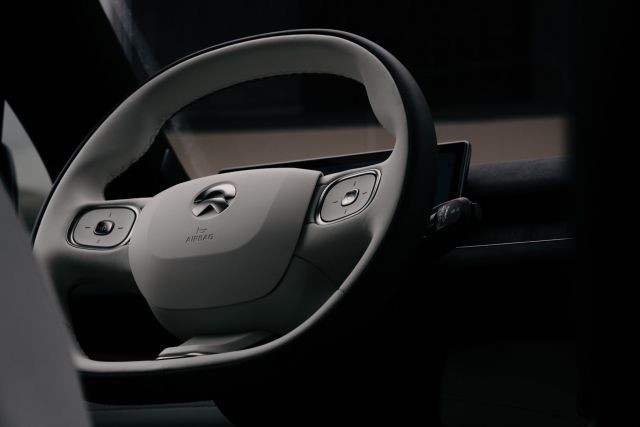
Despite the sometimes negative criticisms and opinion of South Africa’s relations to the Red Dragon, one can only hope that some of China’s ways in this regard (that is, NEVs) will rub off on the powers that be.
This week, Reuters reported that China unveiled a 520-billion-yuan ($72.3 billion) package to boost sales of electric vehicles (EVs) and other green cars over the next four years to prop up a softening auto demand, sending shares of automakers sharply higher.
The package, widely expected after an earlier government pledge to promote the industry, comes as softening sales in the world's biggest auto market have raised concerns over economic growth, which is losing momentum after a brisk start to the year.
New energy vehicles (NEVs) purchased in 2024 and 2025 will be exempt from purchase tax amounting to as much as 30,000 yuan per vehicle, with the exemption halving for purchases made in 2026 and 2027, the Ministry of Finance said in a statement.
The total tax breaks will amount to 520-billion-yuan, Vice Minister of Finance Xu Hongcai said at a press conference.
The move is an extension of the current policy under which NEVs – which include all-battery electric vehicles (EVs), plug-in petrol-electric hybrids and hydrogen fuel-cell vehicles – are exempt from purchase tax until the end of 2023.
The announcement follows a cabinet meeting during which authorities said they would extend and optimise the tax exemption and study policies to promote NEV development.
The incentives put NEVs, a mainstay of big-ticket spending, on the front burner of a broad-based push to rekindle growth in the world's second-largest economy.
The government heavily promoted NEVs in recent years through incentives that supported the rise of local players such as Li Auto, NIO and BYD.
NEV sales rose 10.5% in May from a month earlier, according to data from the China Passenger Car Association. Sales jumped 60.9% from a year earlier when COVID-19 curbs still roiled auto production and sales.
Wednesday's announcement is the fourth extension. The tax break was announced in 2014 and extended in 2017, 2020 and 2022.
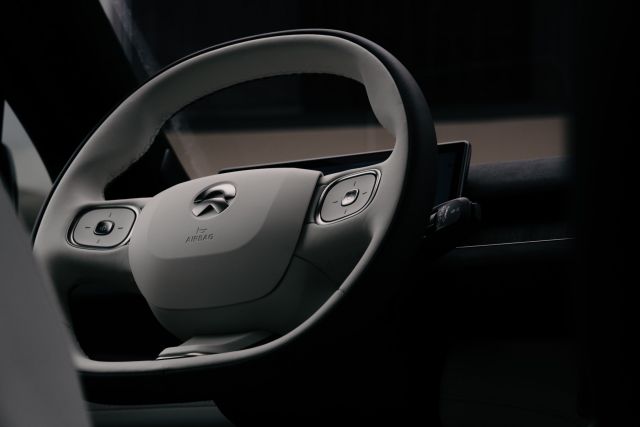
Auto China 2026 marks another milestone in the evolution of an event that has tracked China’s rise from emerging market to global automotive powerhouse.
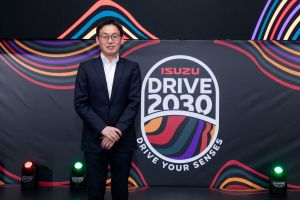
Isuzu Motors South Africa (IMSAf) has announced the appointment of Takashi Nishida as its new Chairman (Non-Executive Director), effective 1 April 2026.
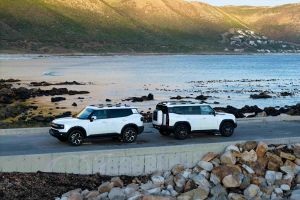
Jetour has quickly established itself in South Africa since its arrival in 2024, with the Dashing and X70 Plus paving the way for the rugged T-Series.
 Advertisement
Advertisement
Advertisement
I have bad reflexes. I was once run over by a car being pushed by two guys
Woody Allen
Geely Auto has lifted the curtain on a new hybrid technology that it believes can redraw the balance of power in a segment dominated for decades by Japanese brands.
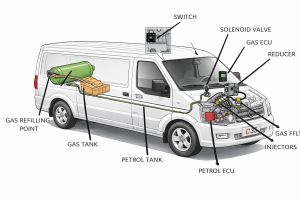
As fuel prices continue to place pressure on South African consumers and businesses, DFSK South Africa has introduced an LPG Autogas conversion solution aimed at reducing operating costs and improving vehicle efficiency across its petrol range.
Toyota Motor Corporation and Isuzu Motors are stepping up plans to bring hydrogen power into Japan’s light‑duty truck market, confirming a jointly developed fuel cell model scheduled for production in the 2027 financial year.