

Hatfield Motor Group takes top honours at Audi Dealer Awards
Audi South Africa honoured the outstanding achievements of its national dealer network at the annual Audi Vorsprung Awards.
- Dealer News
- 28 April 2026
Resistance to EV adoption owing to a variety of concerns remains, despite a surge in adoption in 2022 by a small segment of the market.
Regardless, the spread of EV technology will continue growing and likely soon be a viable option for fleets that see the many benefits it presents.
One industry voice that is positive about mounting concerns and objectives is the CEO of MasterDrive, Eugene Herbert. According to Herbert there are “as many solutions”.
“When deciding if EV vehicles are the right fit for your fleet, it is important not to just look at the challenges but to also investigate the possible solutions. Taking an example from history, when it became a legal requirement to wear seatbelts from the 1960s onwards, it led to heated debate about whether its safety benefits were legitimate. All of these were disproven and today it is an essential safety feature. EV technology often also faces heated opposition but, fortunately, each challenge is not without a solution,” said Herbert.
Masterdrive identified some objections and their solutions.
1. Affordability
While considerable long-term savings are a major appeal, the initial outlay required for EVs still remains the largest barrier to entry. “Higher import costs and a lack of local development combine to create significantly higher costs than internal combustion engines (ICE). Currently, EVs are reserved for premium vehicles in South Africa. Out of the country’s top five sellers of vehicles, one focuses on hybrid options, another is investigating the viability of EV options, while others have no plans to introduce them to their range anytime soon but intend pursuing other zero-emission options,” said Herbert.
Is there a solution?
2. Infrastructure
A worldwide concern is that charging infrastructure may not be readily available. “Yet, according to Deloitte’s 2022 Global Automotive Consumer Study, only 11% of Americans intend using public charging facilities. In a country behind in development, this does pose more of a challenge here. The prospect of not charging your vehicle overnight because of unreliable power infrastructure, creates a somewhat different degree of concern. Another concern is about the lack of charging points on long-distance routes,” explained Herbert.
Various solutions are here or coming:
3. Range anxiety
Fear that a vehicle will not have enough battery charge to reach one’s destination persists in South Africa. “In particular, motorists are concerned about EV range on long-distance trips. It is related to a lack of understanding and certainty about how far one can get with an EV before charging,” said Herbert.
Range anxiety is being extensively addressed:
Ultimately, the change to EV is not an ‘if’ but ‘when’. “As such, rather than dismissing an EV fleet, start looking at not only the challenges but the considerable in-roads made to solving these problems over the last few years. In the first three months of 2022, South Africa sold over 1 400 electric vehicles. This is more than 2020 and 2021 combined – soon fleets will follow suit,” said Herbert.
Audi South Africa honoured the outstanding achievements of its national dealer network at the annual Audi Vorsprung Awards.
South Africa is experiencing its fastest shift yet towards electric mobility, driven not by environmental policy but by sheer economics.
CMS Systems is celebrating 25 years in business, marking a significant milestone for a company that has become a central player in automotive retail technology.
 Advertisement
 Advertisement
You can't buy happiness but you can buy cars and that's kind of the same thing.
Unknown
South Africa is experiencing its fastest shift yet towards electric mobility, driven not by environmental policy but by sheer economics.
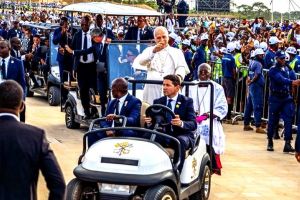
Supporting the Pope on Africa soil in or on vehicles assembled on the continent, is the story of OPAIA Motors.
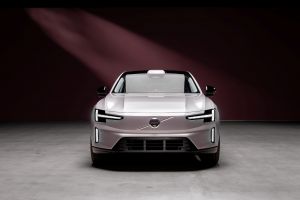
Europe’s shift to electric vehicles (EVs) gathered fresh momentum at the start of 2026, as soaring petrol prices prompted drivers to rethink the cost and security of running petrol and diesel vehicles.