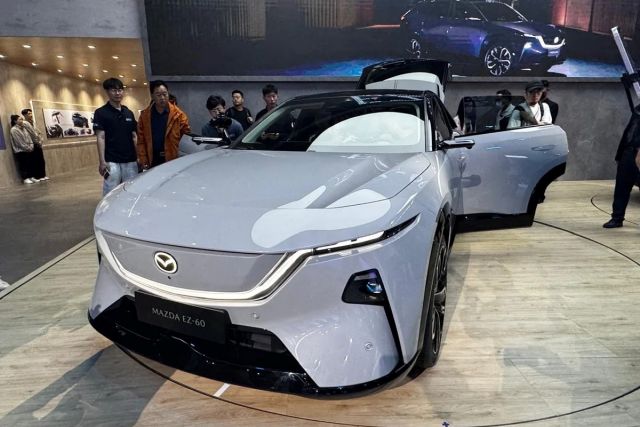
Mazda has unveiled its EZ-60, an electric crossover SUV, the result of a joint venture between Mazda and Changan Automobile. It is the second electric vehicle (NEV) manufactured by Changan Mazda.
Share with friends
It will go on sale in China during this year, and this new model will expand Mazda's electric vehicle line-up in the Chinese market together with EZ-6 launched last year.
The Mazda EZ-60 will be available in electric vehicle (BEV) and the plug-in hybrid vehicle (PHEV) models.
Masahiro Moro, President and CEO of Mazda Motor Corporation, said: "We are very pleased to unveil our second new electric vehicle that brings together the strengths of Mazda and Changan Automobile this year, which marks the 20th anniversary of Changan Mazda, and we feel truly grateful for the support of our customers in China.
A first-class driving experience is predicted with its 50:50 front/rear weight distribution, strut suspension at the front and multi-link suspension at the rear, and electronically controlled dampers that can respond to a variety of driving situations.
The driving range is expected to be around 600km for the BEV model and more than 1 000km per refuelling for the PHEV model.
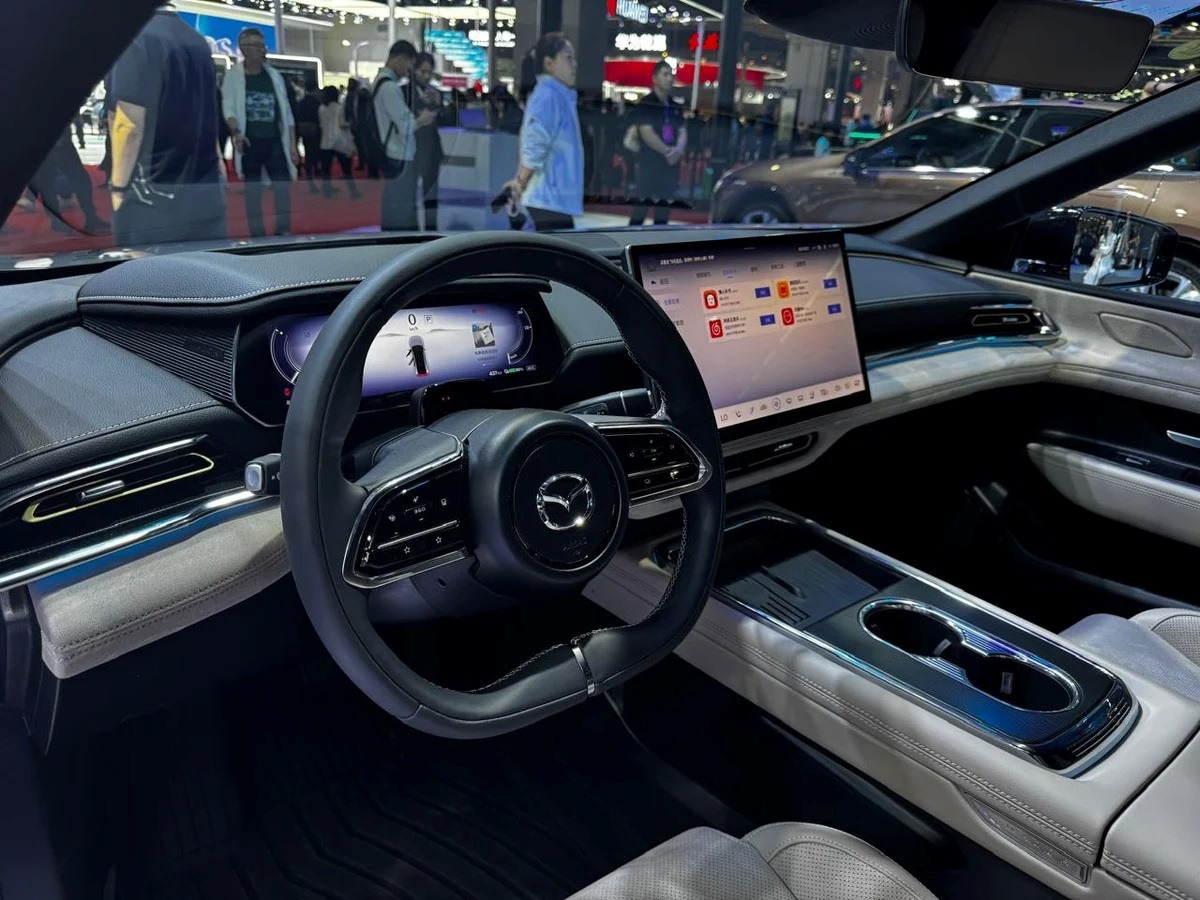
Some smart features include a smart cabin that can be operated by voice, touch or gesture; the intelligent drive to help the driver avoid an accident or reduce damage; and the intelligent parking that can be operated by voice even from outside the vehicle.
Inside is a 26.45-inch 5K integrated flat-panel centre display and a virtual 3D head-up display. Information and visuals displayed prominently in front of the driver support safety and security while providing a futuristic driving experience.
A powerful and realistic sound experience is delivered through 23 speakers and a 3D sound system. In addition, the headrest speakers allow the driver and front passenger to listen to different music.
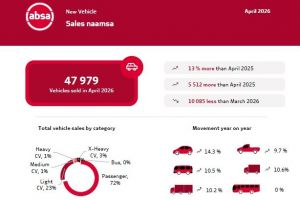
New vehicle sales in 2026 continued their positive trend in April, with the 47 979 units sold marking the best April figure since 2013. This represents a remarkable performance by local automotive retailers despite a host of economic headwinds and a challenging trading environment.
April 2026 marked a turning point in South Africa’s economic landscape, as global energy markets were jolted by escalating geopolitical tensions in the Middle East, according to naamsa | The Automotive Business Council.
Audi is preparing to roll out its biggest SUV yet in the United States (US) this summer, betting that demand for high-end, three-row models will hold up even as trade tensions threaten to raise import costs.
Nissan’s decision to drop a planned $500 million investment in electric vehicle (EV) production at its Canton, Mississippi plant is the latest indication that established manufacturers are reassessing how quickly the market will shift to battery power.
Zero Carbon Charge (CHARGE) welcomes the government’s extension of short term fuel levy relief measures aimed at cushioning consumers from rising fuel prices, but cautions that these interventions do not address the underlying structural challenge facing South Africa’s transport economy.
Volvo Cars has started building the fully electric EX60 at its Torslanda factory outside Gothenburg, with first customer deliveries due in early summer.