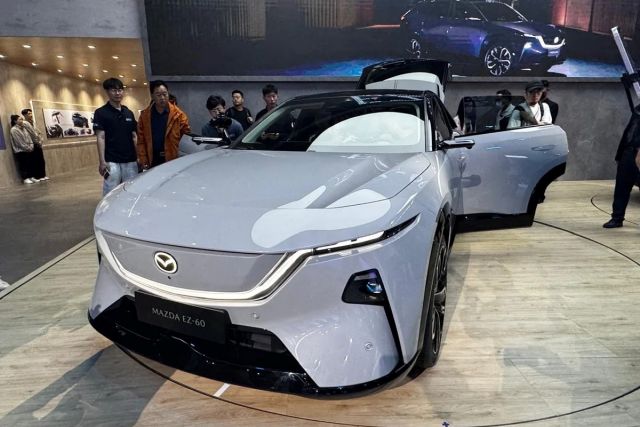
Mazda has unveiled its EZ-60, an electric crossover SUV, the result of a joint venture between Mazda and Changan Automobile. It is the second electric vehicle (NEV) manufactured by Changan Mazda.
Share with friends
It will go on sale in China during this year, and this new model will expand Mazda's electric vehicle line-up in the Chinese market together with EZ-6 launched last year.
The Mazda EZ-60 will be available in electric vehicle (BEV) and the plug-in hybrid vehicle (PHEV) models.
Masahiro Moro, President and CEO of Mazda Motor Corporation, said: "We are very pleased to unveil our second new electric vehicle that brings together the strengths of Mazda and Changan Automobile this year, which marks the 20th anniversary of Changan Mazda, and we feel truly grateful for the support of our customers in China.
A first-class driving experience is predicted with its 50:50 front/rear weight distribution, strut suspension at the front and multi-link suspension at the rear, and electronically controlled dampers that can respond to a variety of driving situations.
The driving range is expected to be around 600km for the BEV model and more than 1 000km per refuelling for the PHEV model.
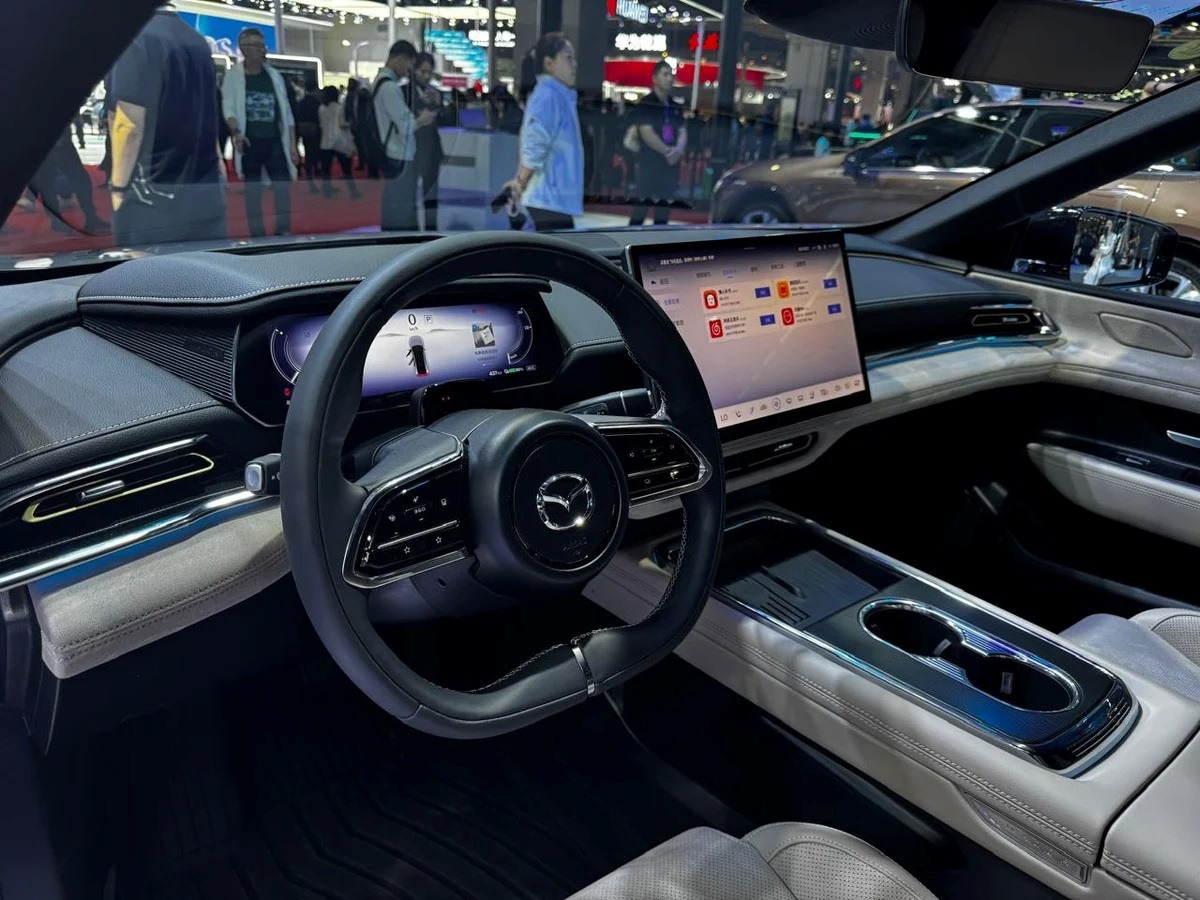
Some smart features include a smart cabin that can be operated by voice, touch or gesture; the intelligent drive to help the driver avoid an accident or reduce damage; and the intelligent parking that can be operated by voice even from outside the vehicle.
Inside is a 26.45-inch 5K integrated flat-panel centre display and a virtual 3D head-up display. Information and visuals displayed prominently in front of the driver support safety and security while providing a futuristic driving experience.
A powerful and realistic sound experience is delivered through 23 speakers and a 3D sound system. In addition, the headrest speakers allow the driver and front passenger to listen to different music.
As fuel prices continue to climb across South Africa, many motorists are beginning to question whether owning a car still makes financial sense. With in-land petrol prices now at R26.63 a litre and diesel costs rising sharply in May, transport expenses are placing growing pressure on household budgets.
Pinewood.AI has added two new embedded modules to its Business Intelligence Solution, giving dealers and OEMs greater insight into financial performance and the customer journey, it says.
House lawmakers in the United States (US) have proposed bipartisan legislation that would require electric vehicles (EVs) to pay a R2 227 ($130) fee annually for road repairs, and R578 ($35) for some plug-in hybrid models, according to Reuters.
BYD is exploring the possibility of taking over underused car plants in Europe as it looks to expand its manufacturing base and strengthen its foothold in the region’s electric vehicle (EV) market.