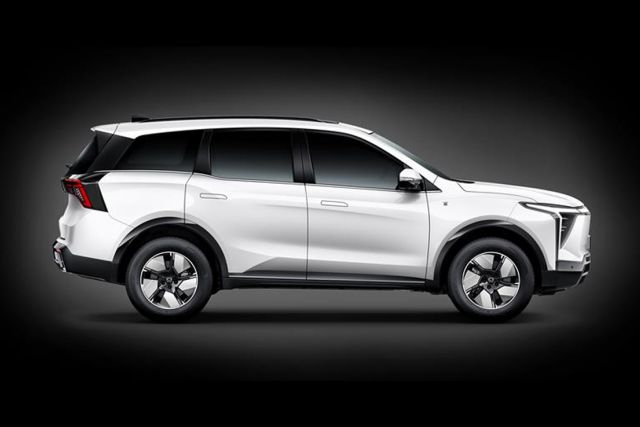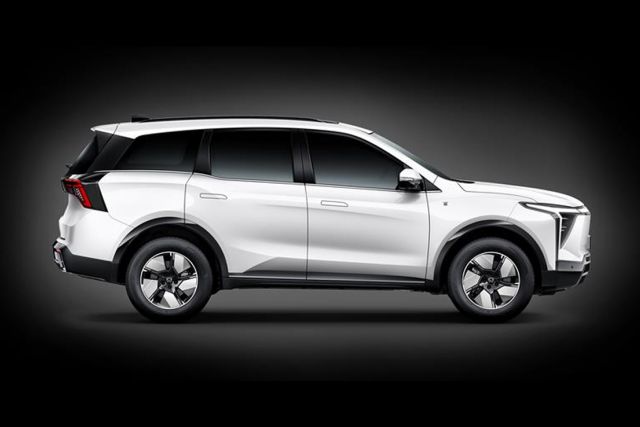
The new model enters a segment largely dominated by Tata Motors, with prices starting at roughly R430 000 for the basic variant and climbing to around R635 000 for the top-end version, which boasts an impressive 500km driving range.
The timing of the launch is significant. India’s EV adoption is accelerating rapidly, with sales of battery-powered cars surpassing 100 000 units this year, a sharp rise from just 23 000 units in the previous year. This surge signals a turning point for the country’s green mobility ambitions.
To reinforce its commitment, Mahindra will inject an additional R4.3 billion into the XEV 9S and an updated BE 6 model, forming part of a broader R34 billion investment plan to develop purpose-built electric SUVs by the 2027 financial year. Unlike traditional petrol conversions, these vehicles are engineered from scratch as electric models.
“With the XEV 9S, we are not merely entering the EV space, we are redefining it,” says Nalinikanth Gollagunta, Chief Executive of Mahindra’s automotive division.
The XEV 9S will be available in six variants, with bookings opening on 14 January and deliveries commencing on 23 January. Market analysts forecast annual sales of 5 000 to 10 000 units, given the scarcity of seven-seater EV options.
Mahindra, India’s second-largest SUV manufacturer by volume, aims for electric vehicles to represent at least 20% of its SUV sales by 2027. Between March and October alone, the company sold over 30 000 electric SUVs. Current production of its earlier EV models, the XEV 9E and BE 6, stands at 4 000 to 5 000 units a month, with plans to double output from April 2026.
Industry observers note that EVs are attracting new customers to Mahindra, with 80% of buyers being first-time users of the brand.
Meanwhile, Tata Motors continues to lead the market with six electric models, priced from R190 000 for the Tiago EV to R510 000 for the Harrier SUV. Hyundai Motor India is also in the fray with its Creta and IONIQ electric offerings.
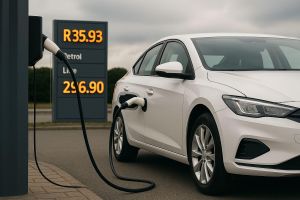
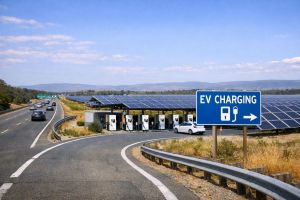
Despite the momentum, electric four-wheelers currently account for only 2% to 3% of India’s total vehicle sales, hampered by high upfront costs and patchy charging infrastructure. The government, however, has set an ambitious target of achieving 30% EV penetration by 2030.