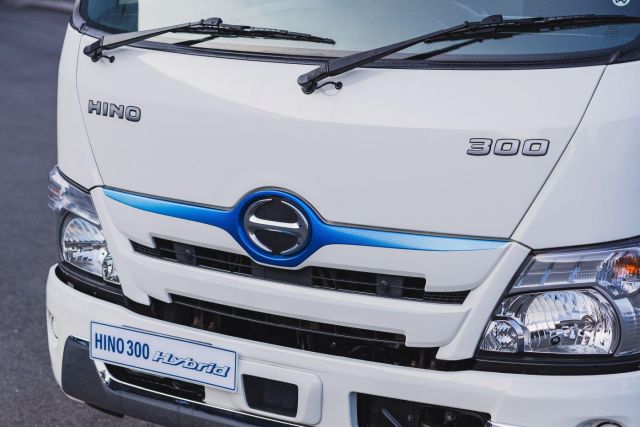
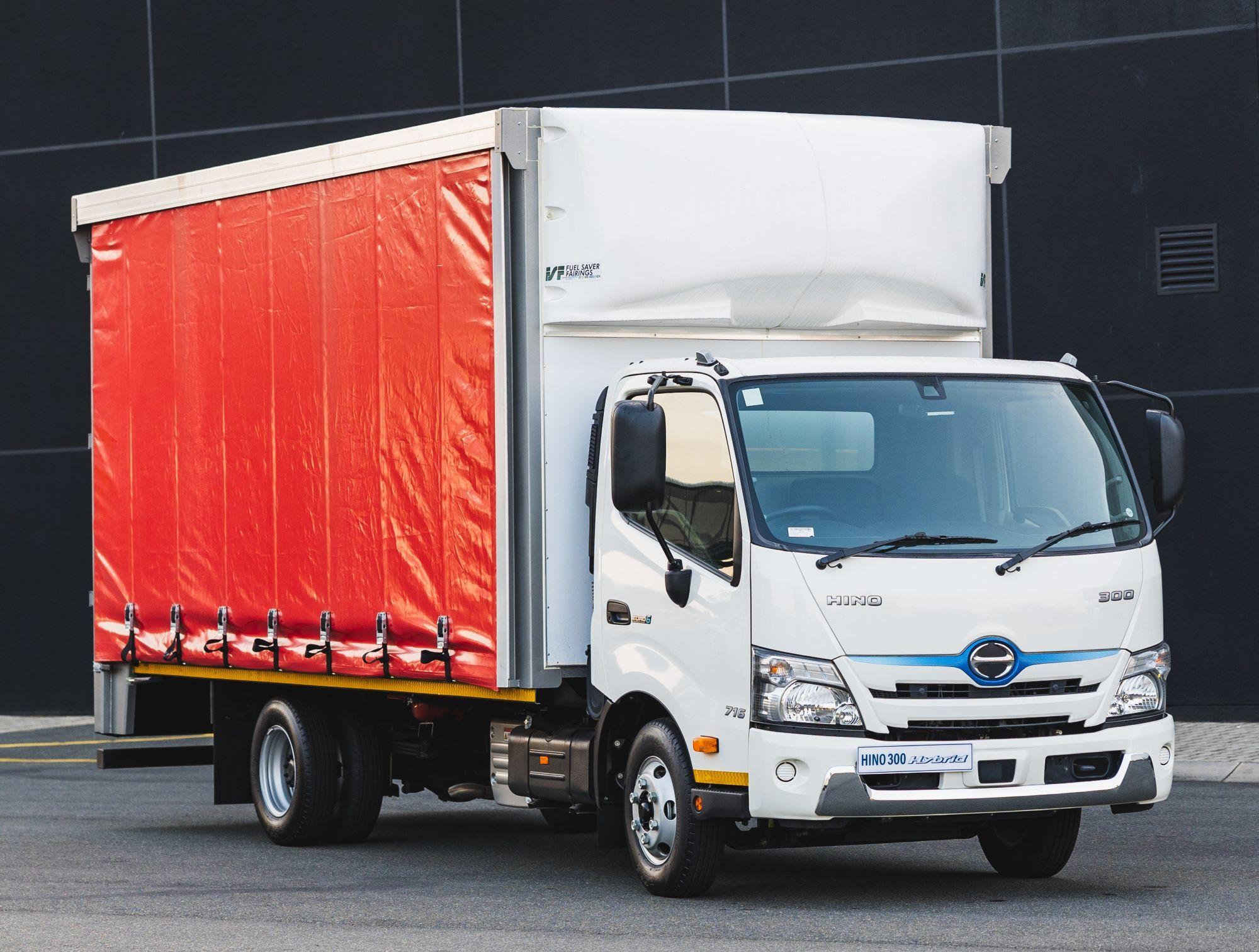
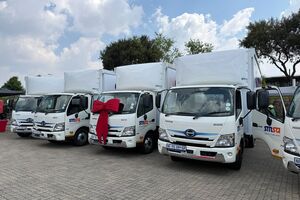
Hino South Africa has extended its Hino 300 Hybrids undergoing local field trials with selected customers.
Share with friends
The idea is to study their performance and research customer interest in acquiring new energy vehicles. The Hino 300 hybrid vehicles use a 4-litre Euro 6 turbo-diesel engine working in combination with an electric motor to lower harmful emissions and improve fuel economy.
The first three eco-friendly Hino 300 Hybrids that came to South Africa have been on trial with Namlog Logistics since 2023, operating out of the Toyota Africa Parts Centre in Ekurhuleni as part of Toyota South Africa Motors’ New Energy Vehicle (NEV) strategy.
Hino Motors of Japan has been involved for many years in programmes to cut emissions and lower fuel consumption as part of its commitment to a cleaner environment in both the manufacturing of its trucks and in their operation.
This multi-pathway move towards carbon neutrality has resulted in Hino developing and testing a variety of power-train solutions, ranging from compressed natural gas to hydrogen to diesel-electric hybrids and battery electric vehicles.
“The balance between cost, range, payload, maintenance and resale is a critical measure when determining what technology works best for specific applications and that is why we are trialling several Hino 300 Hybrid trucks with customers to evaluate these factors locally,” said Itumeleng Segage, General Manager of Hino SA.
In Australia, which faces the challenge of Euro VI emission legislation being imposed from November this year, at a recent 300km test on the Bathurst race circuit and surrounding streets, replicating the conditions for a local delivery operation, it showed fuel savings of up to 24% for the Wide Cab variants and 22% for the Standard Cab.
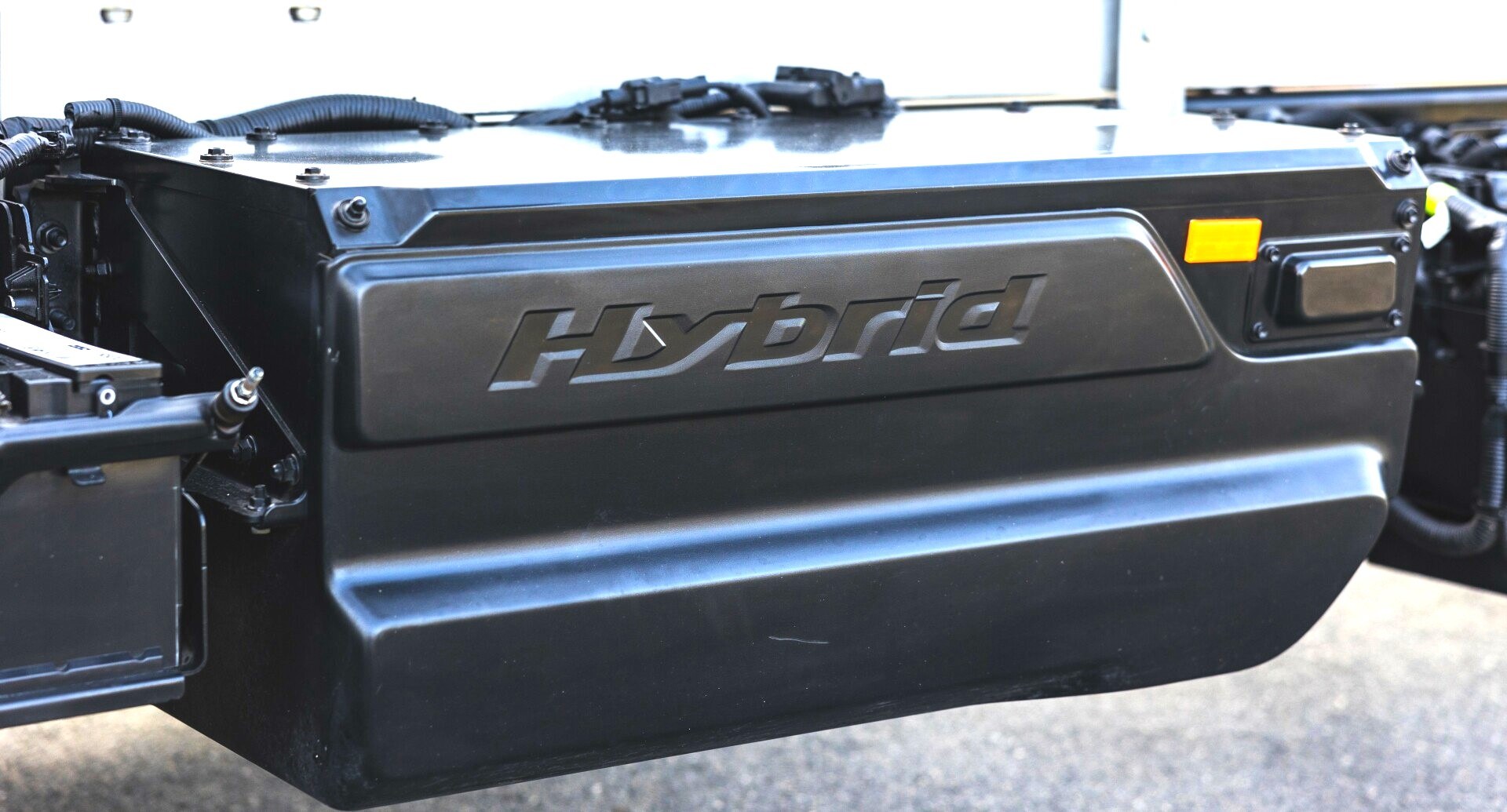
Unlike many hybrid passenger cars, which downsize engine capacity, Hino keeps the full-size diesel engine for the 300 Hybrid to ensure a long working life and under-stressed powertrain.
An electric motor is nestled between the clutch and gearbox, working in parallel with the diesel engine to offer assistance that leads to improved efficiency and reduced carbon dioxide emissions. The diesel engine and electric motor combined produce 111kW of power and 470Nm of torque, with maximum torque delivered as low as 1 200r/min. The Hino 300 Hybrid uses a six-speed automated manual transmission (AMT), which can be manually overridden by the driver if required.
“We are very enthusiastic about the value of hybrid technology in many of the operations that suit the 300 Series, such as urban and city-to-city deliveries. We are therefore keenly looking forward to the results of these local trials and the feedback from the customers who have them on loan,” Itumeleng concludes.
Few can claim a bond with Mazda as deep as the Plitt family's. For more than 60 years, Mazda has been part of the family's story through Mazda Vereeniging, the oldest Mazda dealership in South Africa and a longstanding standalone representative of the brand.
Peugeot has expanded its Landtrek line-up with the addition of a new turbodiesel-powered model aimed at buyers looking for increased performance, greater towing capability and updated technology. The latest derivatives join the range from October 2026 and introduce a significant powertrain upgrade for the bakkie.
SMSA Africa Logistics Group has added five Hino 300 diesel electric hybrid trucks with van bodies to its fleet, following a two-year trial of three such trucks in its delivery operation.
South Africa's new energy vehicle market is becoming increasingly diverse, with plug in hybrid electric vehicles (PHEVs) and fully electric vehicles gaining ground while traditional hybrids remain the largest category.
As South Africans celebrate their rich heritage, it is also worth reflecting on a lesser-known chapter of the country's history: its long connection with electric vehicles (EVs).