

VW celebrated top dealers and top motoring groups
CFAO‘s Mc Duling Motors under the leadership Allan Stiles as Dealer Principal scooped the top award as Dealer of the Year at VW’s recently held Grand Prix Awards.
- Dealer News
- 5 May 2026
Nissan’s decision to drop a planned $500 million investment in electric vehicle (EV) production at its Canton, Mississippi plant is the latest indication that established manufacturers are reassessing how quickly the market will shift to battery power.
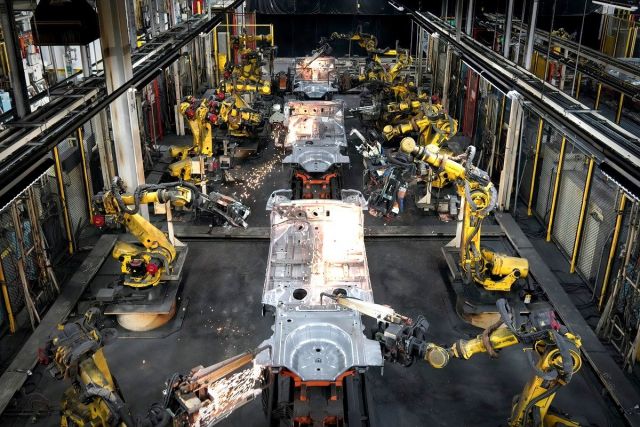
Automotive News reports Nissan had informed US suppliers that the EV programme was off the table and that the site would instead be oriented towards body-on-frame models, starting with a return of the Xterra SUV. What had been pitched as an EV-focused facility is being redirected towards the vehicles that still deliver the steadiest profits in North America: pick-ups and tough, off-road-leaning SUVs.
On one level, it reads as sensible capital discipline. EV sales are still rising, but the curve has been flatter and more uneven than many boardroom plans assumed. At the same time, the shift underlines how wary parts of the traditional industry remain. After setting bold targets, several brands are now stretching launch schedules, resizing factory plans, or leaning more heavily on hybrids and combustion engines.
Ford is a useful example. In August 2024, CNBC reported that Ford delayed production of a next-generation all-electric pick-up intended for a new Tennessee plant and cancelled an electric three-row SUV, while putting more weight behind hybrids and commercial EVs. The company described the changes as a focus on “capital efficiency”, effectively acknowledging that the volumes and margins needed for a rapid, all-in switch have not yet materialised.
General Motors has also kept adjusting its timetable. In July 2024, Green Car Reports, citing Bloomberg, said GM had once again pushed back the ramp-up of electric pick-up production at its Orion Assembly plant in Michigan. This flexibility helps GM match output to demand across electric and petrol models, but it also creates room to defer the difficult work of scaling supply chains and driving down battery costs.
Honda has taken a similar, hybrid-first approach. In its May 2025 business briefing, Honda said it would realign its electrification strategy and reconsider the timing of investment as EV expansion proved slower than expected (Honda Global). The Associated Press also reported that Honda Canada would delay by roughly two years a major EV and battery project in Ontario, pointing to softer demand.
In the truck segment, Stellantis has gone further. Reuters reported in September 2025 that the group was cancelling its Ram 1500 battery-electric pick-up, citing weak demand for full-size electric trucks. Across the industry, the explanations are becoming familiar: high sticker prices, patchy charging provision, and EV economics that often trail comparable petrol models. S&P Global Mobility said in September 2024 that battery-electric growth had turned “choppy” in many markets as hybrids gained ground.
Electrification is not ending, but it is unfolding in fits and starts. The danger for incumbents is that repeated “retiming” becomes a habit, leaving them vulnerable to rivals willing to keep investing through softer demand and use the lull to improve costs, capacity and product.
CFAO‘s Mc Duling Motors under the leadership Allan Stiles as Dealer Principal scooped the top award as Dealer of the Year at VW’s recently held Grand Prix Awards.
Donald Trump has threatened to increase United States (US) tariffs on cars and trucks imported from the European Union to 25% from next week, up from the 15% rate set under last year’s so-called Turnberry framework.
No, the Chinese are not coming to take over – they are already busy accomplishing it.
 Advertisement
 Advertisement
I have bad reflexes. I was once run over by a car being pushed by two guys
Woody Allen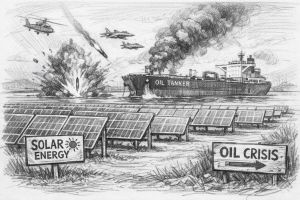
Zero Carbon Charge (CHARGE) welcomes the government’s extension of short term fuel levy relief measures aimed at cushioning consumers from rising fuel prices, but cautions that these interventions do not address the underlying structural challenge facing South Africa’s transport economy.
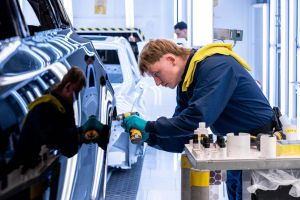
Volvo Cars has started building the fully electric EX60 at its Torslanda factory outside Gothenburg, with first customer deliveries due in early summer.
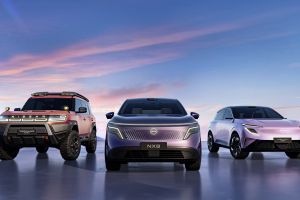
At Auto China 2026, Nissan unveiled two new NEV SUV concept cars, in its accelerated product rollout. It also highlights China’s role as one of the company’s lead markets and a global innovation and export hub, according to Nissan.