

Recall is the name of the safety game
Volkswagen’s popular locally build Polo Vivo is the latest vehicle in South Africa to be recalled this year.
- Industry News
- 6 March 2026
A new report from Deloitte reveals that motorists in the United States remain firmly attached to petrol-powered vehicles, as concerns over cost, charging infrastructure and overall value continue to slow the transition to electric cars.
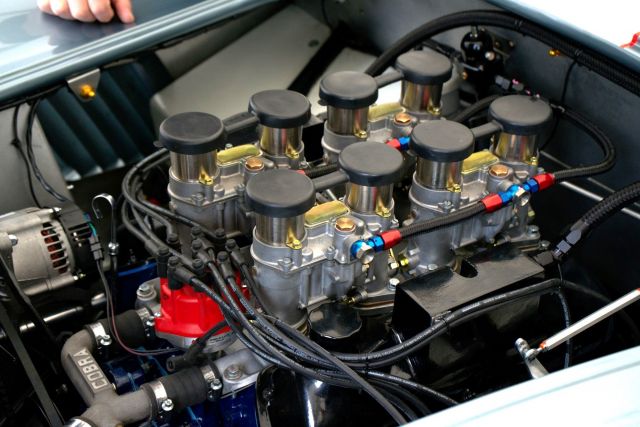
The 2026 Global Automotive Consumer Study shows that interest in traditional internal combustion engine (ICE) vehicles has remained steady, despite manufacturers ramping up their electric offerings. Around 61% of American respondents say their next purchase will be a petrol or diesel car, unchanged from last year. By contrast, enthusiasm for fully electric vehicles (EVs) has crept up only marginally, reaching 7%.
Hybrid models appear to be a more attractive compromise. Approximately one in four drivers are considering a hybrid for their next vehicle, signalling a desire for improved fuel efficiency without full reliance on charging networks.
Cost remains the most significant barrier to widespread EV adoption. Nearly half of respondents (47%) cite driving range as their primary concern, while 44% worry about charging times and 40% about the overall expense. A lack of home charging access adds further inconvenience and cost for many potential buyers.
Although lower running costs are the leading incentive for switching to electric, Deloitte notes that these savings are often offset by higher upfront prices and uncertainty around charging, particularly for those unable to install a home charger.
The study highlights a decline in brand loyalty. More than half of US consumers expect to change brands for their next car, prioritising quality, performance and price over long-standing brand attachment.
Connected technology is gaining traction, with over 50% of respondents saying regular software updates could persuade them to keep a vehicle longer, especially if updates enhance safety, security or performance.
Meanwhile, in Canada, interest in EV adoption is also cooling. However, the complexity of EV repairs means workshop time for these vehicles is increasing.
Data from Mitchell International shows that battery electric vehicles accounted for 4.91% of repairable collision claims nationwide in late 2025, a 24.3% year-on-year rise, marking a record share of overall claims as registrations climb in provinces such as British Columbia and Quebec.
Volkswagen’s popular locally build Polo Vivo is the latest vehicle in South Africa to be recalled this year.
Lexus South Africa new RZ, the brand’s first globally available, purpose-built battery electric vehicle (BEV), has arrived on local shores.
Chery’s luxury brand, a stand-alone nameplate has arrived in South Africa with more larger models (L8) that will be added to the Lepas line-up later.
 Advertisement
 Advertisement
I have bad reflexes. I was once run over by a car being pushed by two guys
Woody Allen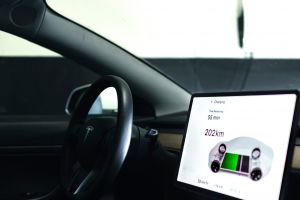
The global race to commercialise solid-state batteries (SSBs) is intensifying, with major vehicle manufacturers and start-ups announcing significant milestones as they edge closer to bringing the technology into production vehicles.
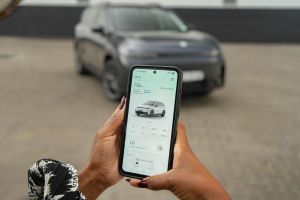
Leapmotor has launched the Leapmotor App in South Africa, giving C10 REEV customers seamless smartphone-based access to their vehicle and connected services.

Ethiopia’s decision to prohibit the import of petrol and diesel vehicles in 2024 has set in motion a rapid restructuring of its transport sector, prompting a remarkable surge in the adoption of electric vehicles (EV).