
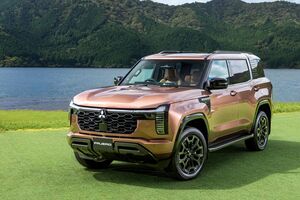
New Mitsubishi Pajero is ready to reclaim its flagship status
The Mitsubishi Pajero is preparing for a new chapter, with an all-new generation set to return as the brand's flagship SUV.
- Product News
- 22 November 2026
US President Joe Biden travelled to Philadelphia last week to announce the recipients of R132 billion in federal grants across 16 states for the development of seven regional hydrogen hubs, advancing a key part of a plan to decarbonise the US economy.

The announcement of the funding to boost manufacturing and blue-collar jobs was held in Pennsylvania – a state that could determine the 2024 presidential election – underscoring the power Biden wields as he spends the upcoming months doling out money flowing from his landmark pieces of legislation that remain largely unknown to large swaths of the American public.
The seven proposed hubs involving companies ranging from Exxon Mobil to Amazon were selected, with their projects spanning 16 states from Pennsylvania to California.
The programme is intended to jump-start the production of "clean hydrogen" along with the infrastructure needed to get it to industrial users like steelmakers and cement plants.
"I'm here to announce one of the largest advanced manufacturing investments in the history of this nation," Biden said. "He noted that the total investment will reach R948 billion when taking into account additional investments from private companies.
Some 79 proposals had initially applied for the money.
Hydrogen is produced by electrolysing water, and the fuel can be considered clean – or low-emission – if it is produced using renewable energy, nuclear energy or natural gas with carbon-capture technology included.
Biden's administration has set a target to increase clean hydrogen output to 10 million metric tons by 2030, and 50 million by 2050, up fivefold from today – and considers the fuel an ideal option for cutting emissions from tough-to-decarbonise industrial users like steel and cement.
Industry representatives have expressed concerns about the economics of rapid development, however, citing high interest rates, inflation and uncertainty around permitting and access to additional federal subsidies.

The Mitsubishi Pajero is preparing for a new chapter, with an all-new generation set to return as the brand's flagship SUV.
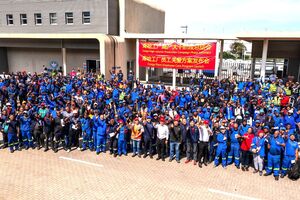
Behind every vehicle that rolls off a production line is a workforce whose skill, commitment and determination make it possible.
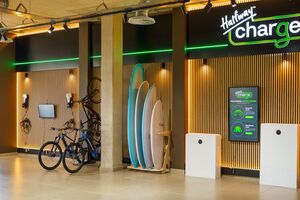
For many South Africans, the idea of owning an electric vehicle (EV) is appealing, but questions about charging, electricity costs, range and the practicalities of everyday use can make the decision difficult.
 Advertisement
 Advertisement
You can't buy happiness but you can buy cars and that's kind of the same thing.
Unknown
South Africa’s petrol price remains a concern for motorists, with inland 95-octane petrol staying above R30 a litre after the Department of Mineral and Petroleum Resources’ November adjustment.
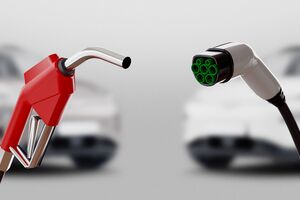
One of the main results of the 2026 Global EV Driver Survey, released by the Global EV Alliance (GEVA) this week, show that South African battery electric vehicle (EV) drivers are among the most satisfied in the world.
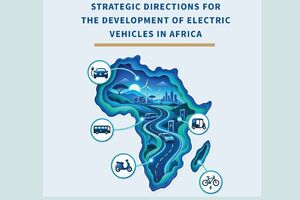
Energy security, electrification, grid infrastructure and sustainable transport take centre stage at COP31 in Antalya, Türkiye, as the climate conference devotes a full day to energy and transport. Africa enters that conversation with a plan of its own: the African Union’s (AU) Continental Framework on Electric Mobility (eMobility).