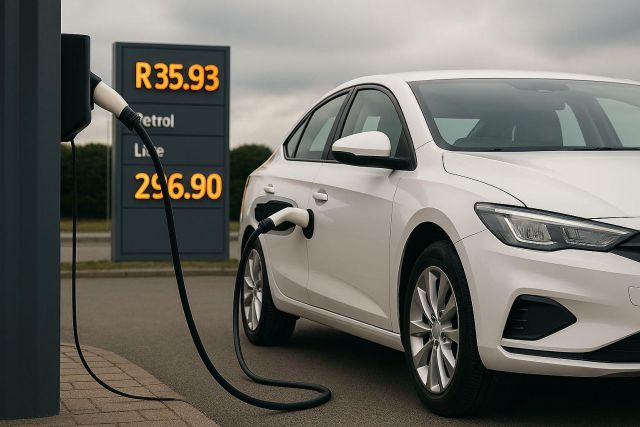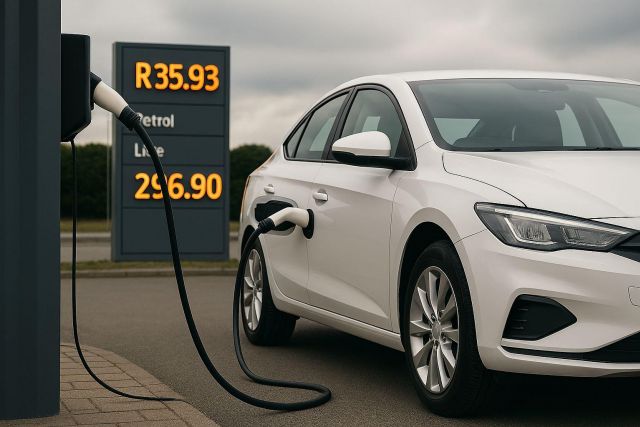
With a disrupted shipping route affecting roughly 20 percent of global oil flows, average European Union (EU) petrol prices have climbed by 12 percent to €1.84 per litre, equal to R35.93.
Online marketplaces report unprecedented interest in used EVs. In Norway, Finn.no confirms that electric vehicles have overtaken diesel as its most frequently sold category, while in France, Aramis auto has seen EV sales nearly double to 12.7 percent within weeks. Countries including Poland, Portugal and Romania have reported EV enquiry increases of between 39 and 54 percent, signalling widespread consumer response to rising fuel prices. Analysts suggest the €2 per litre mark, equal to about R39, is a psychological tipping point prompting greater adoption of electric alternatives.
Locally AutoTrader data shows an 18% drop in diesel enquiries over the last four weeks, with growing demand for electric and hybrid vehicles signalling changing showroom dynamics.
The online platform says interest in alternative technologies is rising sharply. Searches for battery electric vehicles are up +45% over the same period, while hybrid searches are up +16%, although that marks slower growth for hybrids than previously seen. Together, these shifts suggest that rising fuel costs are pushing many South Africans to reconsider their reliance on traditional fossil fuels.
What is particularly notable is that this growing demand for battery electric vehicles is not yet being matched by stock availability in South Africa. EV listings are down -3% even as demand has risen sharply, pointing to a market where supply may already be tightening. That could reflect existing stock being bought up more quickly, while some current owners choose to hold onto their EVs as fuel prices climb.
By contrast, diesel, petrol and hybrid stock supply have all edged higher. That suggests supply in the traditional market remains available, even as buyer attention begins to move elsewhere.
If demand for EVs continues to rise while listings remain constrained, the used market could feel the effects first. Tighter supply and growing demand would likely put upward pressure on prices, particularly for well-priced second-hand electric vehicles.
None of this means diesel is disappearing overnight, or that South Africa has suddenly become an electric vehicle market. But an -18% change in diesel enquiries over four weeks is a meaningful signal, especially when it is happening alongside stronger interest in electric and hybrid alternatives in the country, states the AutoTrader report.
In Europe used EVs are also attractive due to affordability and instant availability. With prices up to 40 percent lower than new models and no lengthy delivery waiting times, buyers are turning to the second-hand market at record levels. Dealers across Europe have reported unprecedented web traffic and EV related enquiries, indicating sustained interest rather than a temporary spike.
Most African nations rely heavily on petroleum imports, meaning surging oil prices fuel inflation and weaken currencies rather than stimulate EV adoption. Kenya, Ghana and South Africa are among the countries most exposed to these pressures, with consumers facing higher transport costs instead of shifting their purchasing behaviour towards EVs.
Where EV uptake is occurring on the continent, it is mainly within commercial and two wheeler segments. Rising fuel costs strengthen the case for electric motorcycles and tuk tuks in East and West Africa. High mileage operators stand to gain the most, but private car buyers remain constrained by high upfront costs, unreliable electricity supply and limited charging infrastructure. These obstacles continue to suppress broad passenger EV adoption across most African markets.
South Africa remains the closest to meaningful EV traction, supported by manufacturing incentives and policy reforms such as tax deductions for EV production. The country’s overall EV uptake still lags far behind European growth rates.
In summary, Europe is undergoing a rapid and wide ranging pivot toward used EVs driven by rising fuel prices, affordability and immediate availability. Africa, facing similar fuel inflation, is experiencing a more uneven and slower transition shaped by long term policy constraints and infrastructure challenges.
Image: AI Generated.