
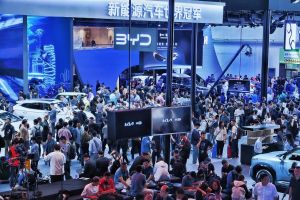
Auto China 2026 promises to be milestone event
Auto China 2026 marks another milestone in the evolution of an event that has tracked China’s rise from emerging market to global automotive powerhouse.
- Industry News
- 16 April 2026
Reuters reported that Ford Motor Co said it expected its electric vehicle business unit to lose $3 billion this year.

On a better note, the company did say though that it remained on track to achieve a pre-tax margin of 8% by late 2026.
The projected loss was revealed ahead of a briefing for investors and analysts on 23 March to discuss details of the automaker’s new financial reporting format.
Starting with first-quarter results, which will be announced on 2 May, Ford will begin reporting by business unit for Model e (electric vehicles), Blue (combustion vehicles) and Pro (commercial vehicles and services).
Ford projects Model e’s cumulative three-year loss from 2021-2023 at $6 billion, including a pro-forma loss last year of $2.1 billion, but expected the unit to be profitable on a pre-tax basis before the end of 2026.
Chief Financial Officer John Lawler said Ford would no longer break out financial results by region, only by business unit, because “that’s how we’re running the company now”.
He said Ford would provide quarterly and annual sales and market share for the company’s top five global markets but would no longer report by region.
Last year, Ford had a pre-tax loss of $600 million in China, broke even in Europe and posted a modest $400 million profit in South America, with most of its earnings before interest and taxes - $9.2 billion - coming from North America.
The company expected its Ford Pro commercial vehicle business to nearly double pre-tax profit this year to $6 billion, while the traditional Ford Blue business should see a modest increase to $7 billion.
Lawler reaffirmed the company’s target of a 10% adjusted EBIT margin by late 2026.
He said the automaker would have the global capacity to build 600,000 electric vehicles by the end of 2023 and 2 million by late 2026 - “and we intend to fully use that capacity”.

Auto China 2026 marks another milestone in the evolution of an event that has tracked China’s rise from emerging market to global automotive powerhouse.
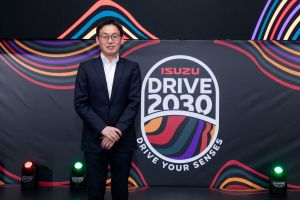
Isuzu Motors South Africa (IMSAf) has announced the appointment of Takashi Nishida as its new Chairman (Non-Executive Director), effective 1 April 2026.
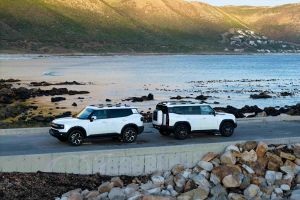
Jetour has quickly established itself in South Africa since its arrival in 2024, with the Dashing and X70 Plus paving the way for the rugged T-Series.
 Advertisement
 Advertisement
You can't buy happiness but you can buy cars and that's kind of the same thing.
Unknown
Geely Auto has lifted the curtain on a new hybrid technology that it believes can redraw the balance of power in a segment dominated for decades by Japanese brands.
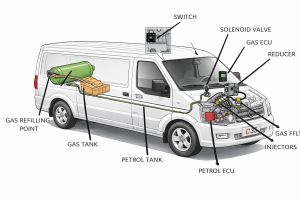
As fuel prices continue to place pressure on South African consumers and businesses, DFSK South Africa has introduced an LPG Autogas conversion solution aimed at reducing operating costs and improving vehicle efficiency across its petrol range.
Toyota Motor Corporation and Isuzu Motors are stepping up plans to bring hydrogen power into Japan’s light‑duty truck market, confirming a jointly developed fuel cell model scheduled for production in the 2027 financial year.