
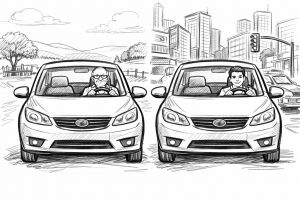
Why insurance premiums differ for the same car
Two South Africans can drive the same make and model of car yet pay very different monthly insurance premiums.
- Industry News
- 23 April 2026
Various international motoring news outlets have reported that Ford will henceforth offer two different battery chemistries on its electric vehicles (EV).
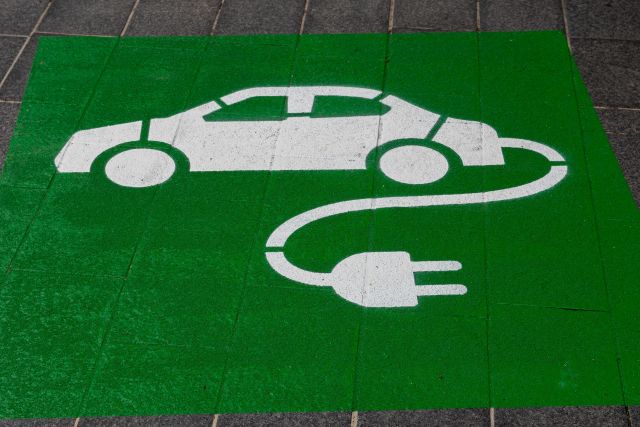
This comes as the company introduces a lower-cost, shorter-range alternative to the battery pack currently used.
Ford made it clear though, that customers, of whom many were new to EVs, would not be burdened with having to make difficult decisions as to which type would be more suitable for their needs as the options will be woven into already-established configurations based on battery range.
Currently, Ford is using batteries in its EVs that contain nickel cobalt manganese chemistry but come spring, they will offer the less expensive lithium iron phosphate chemistry on its Mustang Mach-E. In 2024, it will also be introduced into the company’s F-150 Lightning.
Not only are these batteries low cost, but they are more durable and recharge faster, which is ideal for vehicles that are used for short trips, as opposed to nickel cobalt manganese batteries, which offer a longer range and are more energy dense. The latter are more suitable for customers who need to make long trips, tow or haul.
Customers would, however, continue to only have to make the simple choice between a standard-range or extended-range battery. Standard range will automatically get the lithium iron phosphate version, while extended range will get the nickel cobalt manganese version.
Two South Africans can drive the same make and model of car yet pay very different monthly insurance premiums.

Innovation met mobility as Hyundai Pinetown redefined industry benchmarks by hosting a historic live outside radio broadcast from a moving vehicle.
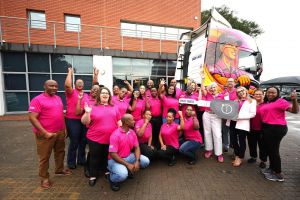
Volvo Trucks South Africa has donated a new FH440 truck-tractor unit to the Commercial Training Academy (CTA) for use in their women truck driver development programmes.
 Advertisement
Advertisement
Advertisement
Have you ever noticed that anybody driving slower than you is an idiot, and anyone going faster than you is a maniac?
George Carlin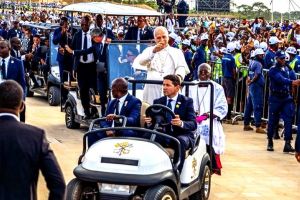
Supporting the Pope on Africa soil in or on vehicles assembled on the continent, is the story of OPAIA Motors.
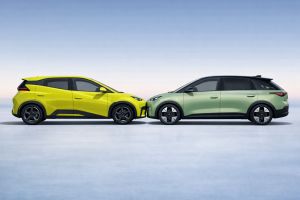
Two years ago, the cheapest mainstream electrical vehicles (EVs) in South Africa were mostly premium products priced well above R700 000.
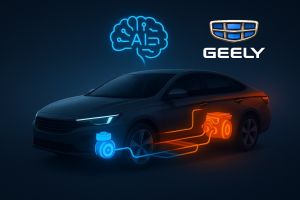
Geely Auto has lifted the curtain on a new hybrid technology that it believes can redraw the balance of power in a segment dominated for decades by Japanese brands.