
CMS Systems marks 25 years in automotive retail technology
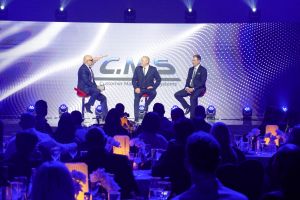
CMS Systems is celebrating 25 years in business, marking a significant milestone for a company that has become a central player in automotive retail technology.
- Industry News
- 24 April 2026
According to a Reuters report, Ford and Renault have agreed to work together on a new generation of compact, lower-priced electric cars for Europe, while also expanding cooperation on commercial vans, as both manufacturers seek to defend their market positions against increasingly aggressive Chinese rivals.
Ford chief executive, Jim Farley, said the competitive pressure facing established carmakers had become existential, particularly in Europe. Speaking in Paris before the deal was unveiled, he described the region as a clear example of how cheaper Chinese vehicles were reshaping the global automotive landscape.
Central to the agreement is the development of two small electric models for Ford, built using Renault technology. The first vehicle, which will be manufactured at a Renault factory in northern France, is scheduled to reach European customers in 2028. Jim says these cars would be smaller than any electric models Ford is planning for the US and would address a missing segment in the company’s European range.
Alongside passenger cars, the two groups will jointly engineer vans sold under both brands across Europe. Farley said the combined scale of the partnership could create a formidable force in the light commercial vehicle market, making it far harder for new Chinese entrants to gain ground.
While Chinese van brands have yet to make a major impact in Europe, he noted that competition with Chinese manufacturers is already intense in emerging markets. Renault chief executive François Provost said Chinese companies were expected to arrive in Europe in greater numbers and that delaying collaboration would be a strategic mistake.
Analysts see the partnership as mutually beneficial. In a research note, Oddo-BHF analyst Michael Foundoukidis says the deal would help Renault spread its fixed costs and improve factory utilisation, while allowing Ford to enter the affordable EV segment via a “capital-light” route. He added that alliances of this kind were becoming essential for traditional carmakers facing structurally lower-cost Chinese competitors.
The agreement emerged after Renault executives visited Ford’s headquarters in Detroit earlier this year. Both sides stressed that cooperation would remain limited to specific projects and that there were no plans for a merger.
Ford’s European presence has weakened in recent years, with its passenger car market share falling from just over 6% in 2019 to about 3.3% during the first ten months of this year. As part of a wider overhaul, the company has reduced its workforce and closed its Saarlouis plant in Germany.
The US manufacturer is also under financial strain as it invests simultaneously in conventional engines and expensive electric technology, particularly following the withdrawal of EV incentives by President Donald Trump’s administration.
By adopting Renault’s electric platforms and combining them with its own design language, Ford hopes to compete more effectively in Europe against established players and against Chinese brands. Ford already uses Volkswagen platforms for two European electric models and collaborates with the German group on vans, with Jim Farley saying the new Renault partnership would sit alongside that relationship.
Renault, meanwhile, stands to gain greater production scale. As Europe’s smallest mainstream carmaker, it does not sell vehicles in China or the United States, the world’s largest automotive markets. Partnering with Ford increases factory output and helps reduce the heavy costs associated with developing new electric vehicles.
The French group is actively expanding its network of alliances. From 2026, it plans to build vehicles in Brazil using platforms supplied by China’s Geely, and it is in talks with other manufacturers, including Chery, over further joint ventures.
François Provost says Renault’s long-term goal was to prove that electric cars could be produced in Europe at globally competitive costs, matching Chinese efficiency while retaining European manufacturing.
CMS Systems is celebrating 25 years in business, marking a significant milestone for a company that has become a central player in automotive retail technology.
Oil prices jumped on Wednesday after Iran's seizure of container ships in the strait.
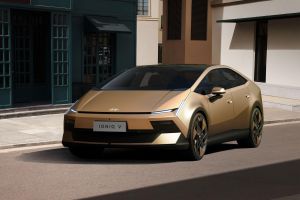
Hyundai Motor is preparing an aggressive comeback in China, unveiling plans to launch 20 new vehicles over the next five years as it tries to rebuild its position in the world’s largest car market.
 Advertisement
 Advertisement
You can't buy happiness but you can buy cars and that's kind of the same thing.
Unknown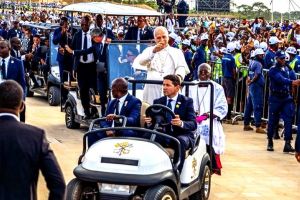
Supporting the Pope on Africa soil in or on vehicles assembled on the continent, is the story of OPAIA Motors.
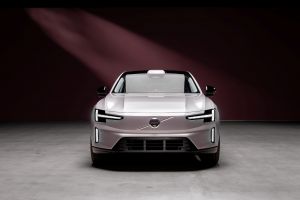
Europe’s shift to electric vehicles (EVs) gathered fresh momentum at the start of 2026, as soaring petrol prices prompted drivers to rethink the cost and security of running petrol and diesel vehicles.
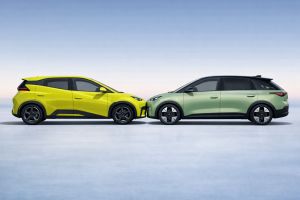
Two years ago, the cheapest mainstream electrical vehicles (EVs) in South Africa were mostly premium products priced well above R700 000.