As the global automotive industry shifts into a greener, electrified future, South African fitment centres stand at a critical crossroad: adapt or risk falling behind.
Share with friends
The road ahead is undeniably electric, and in a world where change is the only constant, the true competitive edge lies in adaptability. For those in the automotive aftermarket, the journey has already begun and the time to prepare is now.
The Tyre, Equipment and Parts Association (TEPA), an association of the Retail Motor Industry Organisation (RMI), says the rise of electric vehicles (EVs) presents not just a technical challenge, but an exciting business opportunity for forward-thinking fitment centres.
According to Dylan Petzer, National Vice-Chairperson of TEPA: “We’re standing at the start of one of the biggest transitions the sector has seen in over a century. EVs are not just coming – they’re already here. For local fitment centres, the time to gear up is now,” he says.
Dylan Petzer.
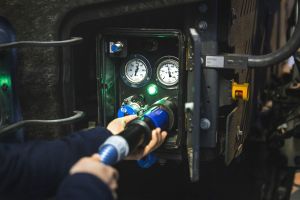
Transitioning to EV servicing requires a fundamental shift in both mindset and operations. Fitment centres must invest in high-voltage diagnostic tools, safety equipment and charging infrastructure.
“Traditional tools and equipment still have their place,” says Dylan, “but they need to be complemented by sophisticated diagnostic scanners, battery testing systems and insulated gear designed specifically for high-voltage environments.
“Examples include Level III-certified EV diagnostic scanners, high-voltage multimeters (CAT III or IV rated), battery analysis systems, and arc-flash-rated PPE such as gloves, face shields and safety boots. Safety signage and designated EV zones are also vital for any technicians working in the area.
In terms of the fitment centre infrastructure, Dylan highlights the need for proper ventilation systems to manage battery off-gassing and emergency thermal events, as well as charging stations with real-time monitoring and shut-off capabilities.
The shift to EVs means upskilling is non-negotiable. “Even the most experienced technicians need to become students again,” he says. “We’re not just replacing parts anymore – we’re diagnosing rolling computers.”
While TEPA is currently developing its own EV technician training programme, fitment centres are encouraged to pursue in-house training offered by OEMs and manufacturers in the interim. These courses cover essential safety protocols, system diagnostics and battery management – equipping technicians with the knowledge to work confidently and safely on EVs.
“Training isn’t a cost — it’s an investment in your future relevance and reputation,” Dylan adds.
Outfitting a fitment centre for EVs doesn’t come cheap, however. Dylan says workshops should expect to invest between R400 000 and R1 million in equipment and infrastructure upgrades, with technician training costs estimated at R100 000 to R200 000 per person. “But the return is worth it,” he says. “Fitment Centres that embrace this change are positioning themselves at the forefront of a fast-growing market.”
TEPA believes that with the right planning and support, even smaller fitment centres can begin their EV journey gradually – starting with basic safety training and equipment, then expanding as demand grows.
Dylan concludes: “You don’t need to overhaul your entire fitment centre overnight. Start small. Invest in the right tools, prioritise safety and equip your team with the knowledge to grow.”
Toyota South Africa Motors (TSAM) is set to make history with a series of Guinness World Records attempts, bringing Hilux owners together from across the country in a bold, large-scale celebration of the all-new 9th generation Toyota Hilux.
To be named the overall Hyundai Dealer of the Year is not something that simply happens. It is the result of hard work, dedication, looking after your staff and customers, and maintaining a clear focus on your goal. That goal is to be the best.
Chery is intensifying its European expansion by exploring partnerships that would allow the company to utilise existing automotive factories rather than constructing new ones.
BYD and Tesla, two giants of the electric vehicle industry, are navigating diverging challenges. BYD faces mounting competition in China and questions over its pricing strategy, while Tesla grapples with fading incentives and unsold inventory in the United States.
Volvo has commenced on-road testing of heavy trucks powered by hydrogen combustion engines. This pioneering solution places Volvo at the forefront of the industry, with commercial launch planned before 2030.
While rising fuel prices often trigger spikes in interest around electric vehicles, Volvo Car South Africa believes the real reasons South Africans are starting to consider EVs go far beyond the petrol pump.