
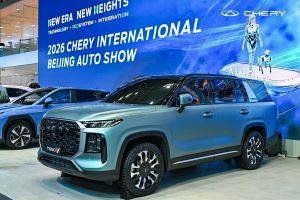
Chery Group showcase a variety of new vehicles
Brands in the Chery Group showcase their latest offerings at the 2026 Beijing Auto Show recently held in China.
- Industry News
- 29 April 2026
South Africa’s electric vehicle landscape is shifting rapidly as government policy, global market pressure and local investment begin to align. Yet a clear divide remains between the slow uptake of fully electric vehicles (EVs) and the stronger growth in hybrids, reflecting the realities of affordability and infrastructure.
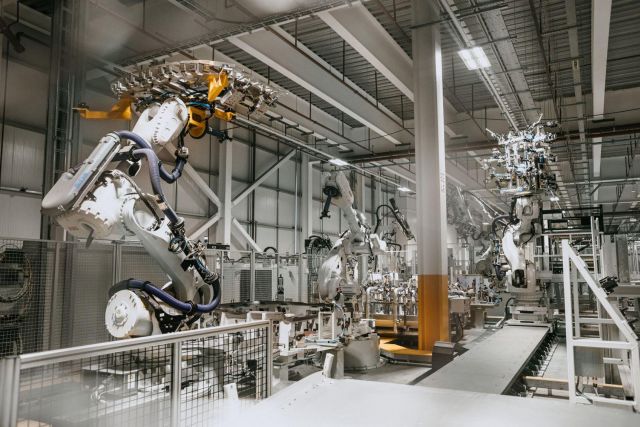
With new incentives now in place and major policy signals from government, it appears as though the question is not whether South Africa will transition to new energy mobility, but how quickly it can make the shift and whether it can capture manufacturing and battery opportunities along the way.
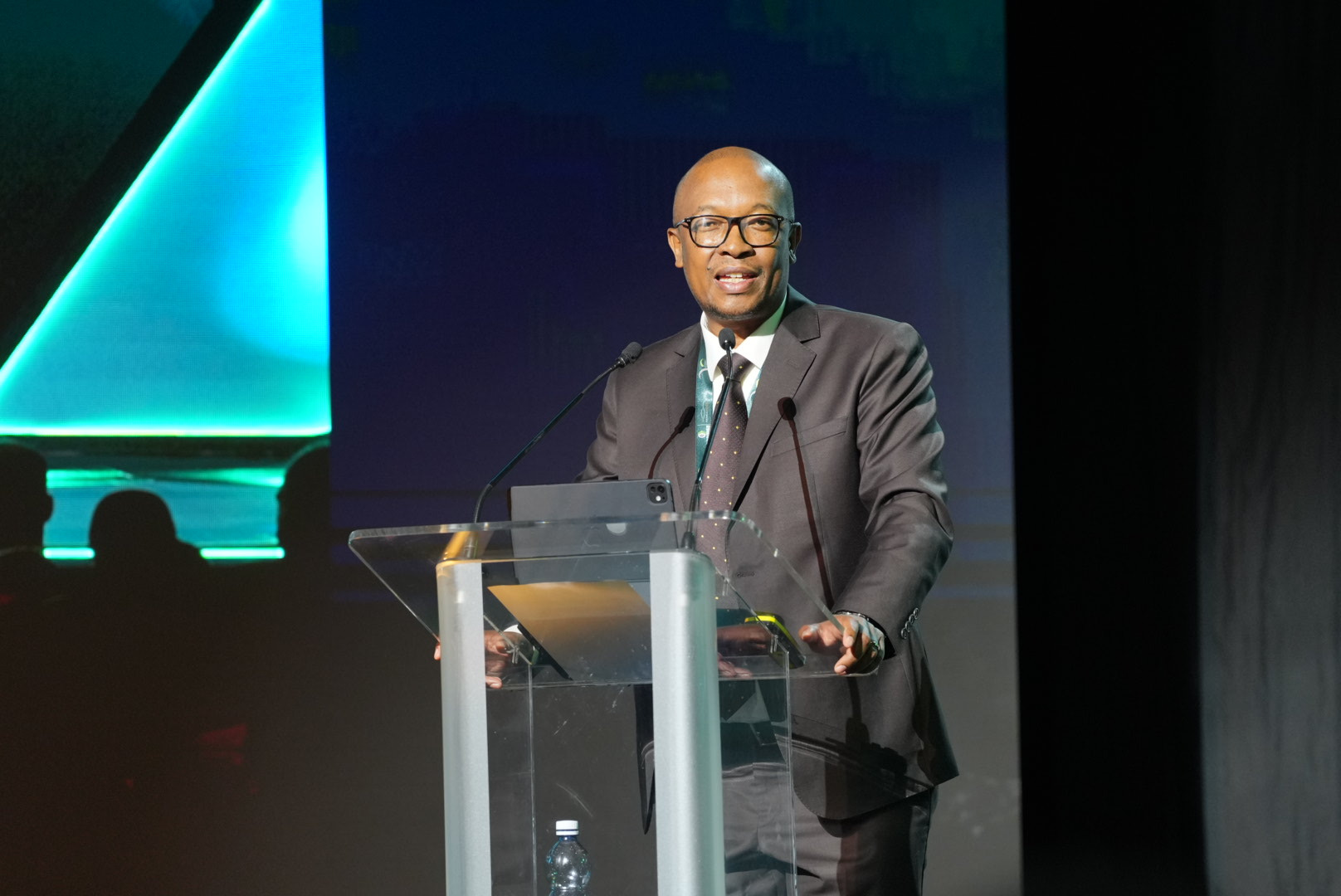
The Minister of Trade, Industry and Competition, Parks Tau, has been clear that South Africa must embrace New Energy Vehicles with urgency. Speaking at the 2025 South African Auto Week, he warned that “global markets are rapidly transitioning away from internal combustion engines” and emphasised that markets such as the United Kingdom and the European Union, which together absorb almost half of South Africa’s vehicle exports, will end the sale of new fossil fuel vehicles by 2035. “If we do not adapt, we risk losing these key export markets,” he says.
This warning comes at a time when domestic new energy vehicles (NEVs) sales are rising, although the pattern is uneven. In 2024, some 15 611 NEVs were sold in South Africa, representing 3 percent of the market.
Hybrids and plug in hybrids account for most of this growth, while fully EVs still face cost hurdles. Naamsa figures show that EV sales declined by 16.4 percent in the first quarter of 2025 compared to the same period in 2024. By contrast, the broader NEV category continued expanding due to strong hybrid demand. Used EVs tell a similar story. Dealerfloor reported that sales almost doubled in 2024, increasing from 309 to 540 units, but this remains from a very small base.
Consumers remain cautious, and a major reason is affordability. TransUnion’s Mobility Insights Report shows that the high upfront price of EVs limits adoption, even as overall passenger sales improve. Toyota South Africa’s CEO summed up the dilemma simply: EVs are “great but just too expensive” for most local buyers, while hybrids provide a more practical option that requires no charging infrastructure. TechCentral further notes that used EV prices are depreciating faster than other vehicle segments, reinforcing buyer hesitancy.
To future proof this industry, government amended the Automotive Production and Development Programme to support EVs and components, and introduced the headline 150 percent tax deduction for investment in electric and hydrogen vehicle production from 2026.
This incentive aligns with the 27 billion US dollar EV investment opportunity outlined by the Treasury earlier in 2025. The Automotive Business Council | naamsa welcomed the incentive, describing it as critical to attracting manufacturing of EVs and their components.
Central to this long-term industrial plan is battery production. Minister Tau highlighted that South Africa and the wider region hold some of the world’s largest deposits of manganese, platinum, nickel, cobalt and rare earth minerals. These are crucial for battery chemistries.
“This is a once in a generation opportunity to move beyond exporting raw materials and instead beneficiate locally,” he says. Government has finalised a National Critical Minerals Strategy with partners including the World Bank to support gigafactory investment, battery assembly, recycling and research hubs.
This vision aligns closely with global trends identified at the same event the Minister was speaking.
Dr Philipp Wunderlich noted that countries such as Indonesia and Chile are leveraging mineral endowments to attract EV value chain investment, while China controls more than 75 percent of global battery production and continues to strengthen its position upstream.
South Africa could position itself as a competitive African hub, combining mineral resources with established automotive production, but it will require rapid investment in refining, precursor production and skills.
The African Continental Free Trade Area (AfCFTA) also offers opportunities. It was pointed out that vehicle exports to Africa reached R48.1 billion in 2024, a rise of 12.4 percent. AfCFTA as a “game changer” that supports regional value chains, harmonised rules of origin and investment in shared battery and component production. South Africa is pursuing an African Auto Pact to deepen these ties and support continental industrialisation.
While the production side is gaining momentum, consumer support remains essential. Banks are beginning to step in. In July 2025 Absa partnered with Chinese EV manufacturer BYD to provide full vehicle finance, insurance and dealer wholesale finance across dealerships. The bank aims to grow its sustainable finance portfolio to 100 billion rand, signalling its intent to support both EV and hybrid buyers. Although pricing varies by model, the partnership is expected to broaden access and encourage uptake.
Looking ahead, South Africa’s transition will likely unfold in phases. Hybrids will dominate the medium term as they meet consumer needs for lower running costs without charging constraints. Fully electric vehicles will grow steadily as prices fall, infrastructure expands and second-hand values stabilise.
On the industrial front, the split between manufacturing EVs, hybrids or batteries will depend on investment flows, but government is clearly steering towards capturing as much of the battery value chain as possible.
Additional reporting:
Dr Philipp Wunderlich, Harnessing Emerging Technologies in the Automotive Industry (SA Auto Week 2025), Naamsa, EV sales and market updates 2025, TechFinancials, South Africa unveils 27 billion US dollar EV incentive plan, BizCommunity, 2025 Budget Speech: Financial incentives key to accelerating EV transition, TransUnion, Mobility Insights Report Q2 2025, Absa and BYD partnership and Minister Parks Tau keynote address at 2025 SA Auto Week.
Brands in the Chery Group showcase their latest offerings at the 2026 Beijing Auto Show recently held in China.

South African motorists are heading for another fuel price adjustment in early May, with increases likely to be driven mainly by global oil prices and a weaker rand, rather than additional tax changes.

Mahindra South Africa has announced a change to its key leadership position with Rajesh Gupta, current CEO of Mahindra South Africa, appointed as Regional Head for South Africa, Australia, New Zealand and South Asia for the parent company Mahindra and Mahindra.
 Advertisement
 Advertisement
I have bad reflexes. I was once run over by a car being pushed by two guys
Woody Allen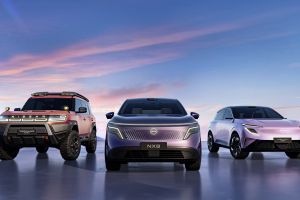
At Auto China 2026, Nissan unveiled two new NEV SUV concept cars, in its accelerated product rollout. It also highlights China’s role as one of the company’s lead markets and a global innovation and export hub, according to Nissan.
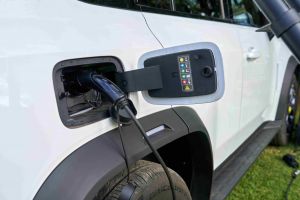
South Africa is experiencing its fastest shift yet towards electric mobility, driven not by environmental policy but by sheer economics.
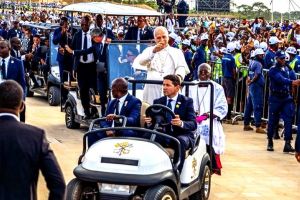
Supporting the Pope on Africa soil in or on vehicles assembled on the continent, is the story of OPAIA Motors.