

New JMC Vigus will make an impression
Following the official brand re-launch by the Salvador Caetano Group, JMC South Africa announce the arrival of the All-New JMC Vigus.
- Product News
- 17 April 2026
The automotive chip industry is set for remarkable expansion, with valuations expected to climb from $77.42 billion this year to $133.05 billion by the decade's end, according to research from MarketsandMarkets.

The 11.4% annual growth rate underscores semiconductors' increasingly vital role as vehicles become more electrified, connected and autonomous.
Today's automobiles rely heavily on semiconductor technology for fundamental operations, from converting electrical power efficiently to processing vast amounts of sensor data in real time. The industry's pivot towards battery-electric platforms and software-driven functionality is dramatically raising the electronic content per vehicle.
This evolution is further accelerated by global emission reduction targets and consumer expectations for sophisticated connectivity and safety features. Advanced materials like Silicon Carbide and Gallium Nitride are enabling new generations of power management components capable of handling the extreme voltages and thermal demands of electric propulsion systems.
Sensor components are projected to achieve the steepest growth curve among all semiconductor types. The expansion of driver-assistance capabilities requires vehicles to carry extensive arrays of detection equipment, radar transceivers, LiDAR units, ultrasonic proximity sensors and high-resolution cameras, working in concert to map the vehicle's surroundings with precision.
These technologies are fundamental to collision avoidance, automated parking and adaptive speed control, forming the foundation for increasingly autonomous driving capabilities. In electric and hybrid platforms, sensors additionally perform critical monitoring of battery cells and cooling systems.
Conventional combustion vehicles are forecast to represent the largest propulsion category through 2030, particularly across developing economies where affordability concerns and established refuelling networks favour traditional technology. These vehicles nonetheless require sophisticated chips to meet stringent emission regulations, improve fuel consumption and support modern infotainment and connectivity expectations.
Regional analysis indicates that Asia Pacific will dominate market share, supported by concentrated automotive production in China, Japan, South Korea and India. These countries are making substantial investments in both electric vehicle manufacturing and indigenous semiconductor production capabilities.

Following the official brand re-launch by the Salvador Caetano Group, JMC South Africa announce the arrival of the All-New JMC Vigus.

Jetour South Africa hosted its inaugural Dealer of the Year Awards on Tuesday night, bringing together its national dealer network of nearly 60 dealerships.

South Africa’s motorists and automotive sector are facing a fresh layer of uncertainty as the Middle East conflict continues to disrupt global oil markets, but for now the country’s fuel supply remains stable even as costs rise.
 Advertisement
 Advertisement
Have you ever noticed that anybody driving slower than you is an idiot, and anyone going faster than you is a maniac?
George Carlin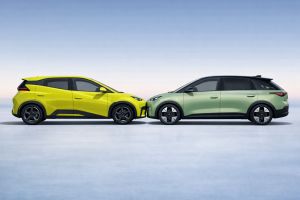
Two years ago, the cheapest mainstream electrical vehicles (EVs) in South Africa were mostly premium products priced well above R700 000.

Geely Auto has lifted the curtain on a new hybrid technology that it believes can redraw the balance of power in a segment dominated for decades by Japanese brands.
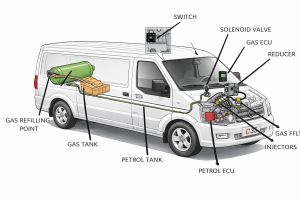
As fuel prices continue to place pressure on South African consumers and businesses, DFSK South Africa has introduced an LPG Autogas conversion solution aimed at reducing operating costs and improving vehicle efficiency across its petrol range.