
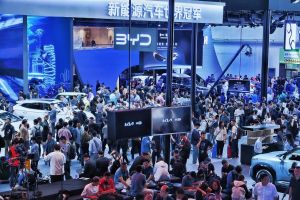
Auto China 2026 promises to be milestone event
Auto China 2026 marks another milestone in the evolution of an event that has tracked China’s rise from emerging market to global automotive powerhouse.
- Industry News
- 16 April 2026
The European Commission charts a zero-emission vehicle future for vehicles exported to Europe, while holding the commitment to reducing CO2 emissions from all new vehicle sales.
Under the new proposals, zero emission vehicles, which include battery-electric and fuel-cell electric vehicles, maintain a key dominance after 2035, which is also the target timeline of South Africa’s Automotive Masterplan. In 2022, about 4% of motor vehicles imported to the European Union were from South Africa, with 169 093 units in total.
Above these developments, battery electric vehicle sales continue to grow, and last year exceeded the number of new internal combustion sales in Europe, posting their highest figures in December.
“Europe’s Automotive Package announcement is no lifeline for the South African automotive industry,” says Hiten Parmar, Executive Director of The Electric Mission.
“International regulatory measures put further pressure on South Africa’s industrial transformation into local manufacturing of zero emission vehicles and their associated components. There are thousands of jobs on the line across the value chain of our automotive industry.”
The Battery Booster component of Europe’s Automotive Package will see investment in European manufacturing capacity to enhance local production of battery electric vehicles. There is a mutual benefit opportunity under the Clean Trade and Investment Partnership (CTIP) signed between the European Union and South Africa in strengthening the battery value chain across both regions.
“The significance of the 2035 timeline in Europe requires strategic intervention on the part of South Africa’s supply side and demand side policies” says Hiten. “This is a critical opportunity to take action and align the South African automotive industry with key markets.”
In January, Morocco achieved a historic industrial milestone as Africa's leading automaker, overtaking South Africa from the top position. Driven by rapid industrial expansion, high-tech investments and renewable energy infrastructure, Morocco’s automotive sector experienced a 79% increase in automotive production alone.
A G20 task force submission to the Presidency drew relevance to the adoption of electric vehicles in emerging economies. "Fuel efficiency and vehicle emission standards set fleet-wide performance benchmarks, encouraging manufacturers to innovate, whether through more efficient combustion technology or a faster transition to zero emission vehicles,” says Parmar.
While the automotive sector is a cornerstone of South Africa’s economy, the lack of clear policy and support is endangering it.
Auto China 2026 marks another milestone in the evolution of an event that has tracked China’s rise from emerging market to global automotive powerhouse.
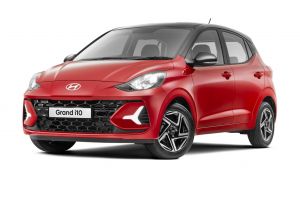
Hyundai Automotive South Africa is expanding its Hyundai Grand i10 range with the introduction of a new Executive derivative, as competition intensifies in the price-sensitive entry-level vehicle market.
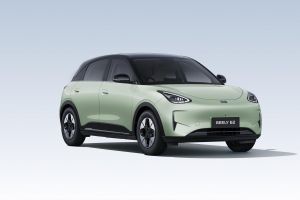
Geely has launched the new Geely Auto E2 in South Africa, adding a compact all electric hatchback to its growing local line up.
 Advertisement
 Advertisement
You can't buy happiness but you can buy cars and that's kind of the same thing.
Unknown
Toyota Motor Corporation and Isuzu Motors are stepping up plans to bring hydrogen power into Japan’s light‑duty truck market, confirming a jointly developed fuel cell model scheduled for production in the 2027 financial year.
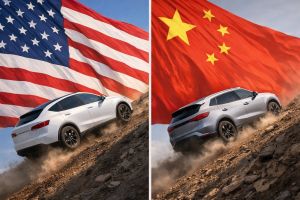
BYD and Tesla, two giants of the electric vehicle industry, are navigating diverging challenges. BYD faces mounting competition in China and questions over its pricing strategy, while Tesla grapples with fading incentives and unsold inventory in the United States.
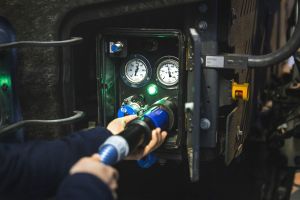
Volvo has commenced on-road testing of heavy trucks powered by hydrogen combustion engines. This pioneering solution places Volvo at the forefront of the industry, with commercial launch planned before 2030.