
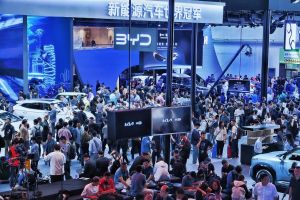
Auto China 2026 promises to be milestone event
Auto China 2026 marks another milestone in the evolution of an event that has tracked China’s rise from emerging market to global automotive powerhouse.
- Industry News
- 16 April 2026
The electric vehicle race in India – the world’s third largest car market – is only in the qualifying stage but global investors are paying up for a good seat, reports Reuters.
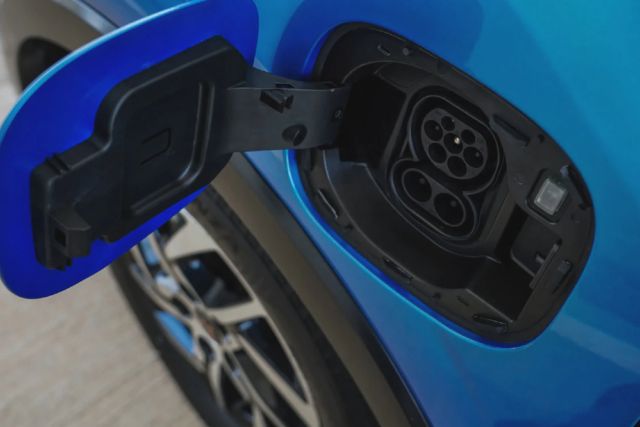
Singapore's Temasek handed Anand Mahindra’s EV business a punchy valuation of up to $9.8 billion this month. The $23 billion Mumbai-listed Mahindra & Mahindra (MAHM.NS) generates most of its top line from its sprawling autos business churning out everything from commercial vehicles to three wheelers.
Sport utility vehicles account for half the units it sold in India in the year to March, and they are the focus of M&M’s passenger EV business, which is welcoming the new investor. So far in the financial year to March 2024, it has sold 1 651 electric passenger vehicles, nearly four times what it sold in the previous period.
It is a second big endorsement for Mahindra who has steered one of the best-performing stocks in the Nifty 50 (.NSEI) over the past 20-odd years. Temasek will take up to a 3% stake for a $145 million outlay. It follows the sale of up to 4.8% to British International Investments, the UK's development finance institution, at a $9.1 billion valuation in July last year. M&M will leverage its investors’ expertise, especially on issues relating to ESG, without diluting its existing shareholders too much.
The scarcity of opportunities to ride the boom means India is likely to throw up more hot deals. Electric vehicles made up less than 2% of cars sold in the country in 2022 compared to about 25% in China where Tesla (TSLA.O) and BYD (1211.HK), (002594.SZ) dominate.
India also has fewer start-ups: Tata Motors has more than a 70% market share in EVs, followed by China’s MG Motors’ 12% and M&M’s 7%. Traditional car giants don’t offer much. The $34 billion Maruti Suzuki (MRTI.NS) has a 42% market share in passenger vehicles but it is dragging its feet in making the transition to clean energy models. The next challenge for India’s EV makers is to win the market’s enthusiasm too.
To place it in context…
India’s Mahindra and Mahindra on Aug 3 said Temasek would invest $145 million in the Indian car company’s electric vehicle unit at a post-money valuation of up to $9.8 billion.
The deal will happen in one or more tranches, handing the Singaporean investor a stake of between 1.49% and 2.97%. Temasek will receive pre-emptive rights to participate in future funding rounds. Mahindra’s electric vehicle unit last year raised up to $250 million from British International Investment, the UK's development finance institution, at a valuation of up to $9.1 billion.
Mahindra says it expects electric models to make up between 20% and 30% of its total sales of sport utility vehicles, the largest part of its autos business, by March 2027.
Shares of Mahindra have risen 4.1% since the Temasek investment was announced.
Auto China 2026 marks another milestone in the evolution of an event that has tracked China’s rise from emerging market to global automotive powerhouse.

Isuzu Motors South Africa (IMSAf) has announced the appointment of Takashi Nishida as its new Chairman (Non-Executive Director), effective 1 April 2026.

Jetour has quickly established itself in South Africa since its arrival in 2024, with the Dashing and X70 Plus paving the way for the rugged T-Series.
 Advertisement
Advertisement
Advertisement
I have bad reflexes. I was once run over by a car being pushed by two guys
Woody Allen
Geely Auto has lifted the curtain on a new hybrid technology that it believes can redraw the balance of power in a segment dominated for decades by Japanese brands.
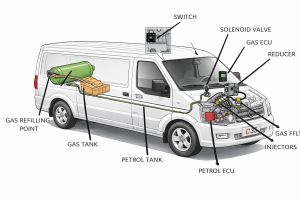
As fuel prices continue to place pressure on South African consumers and businesses, DFSK South Africa has introduced an LPG Autogas conversion solution aimed at reducing operating costs and improving vehicle efficiency across its petrol range.
Toyota Motor Corporation and Isuzu Motors are stepping up plans to bring hydrogen power into Japan’s light‑duty truck market, confirming a jointly developed fuel cell model scheduled for production in the 2027 financial year.