

What SA’s fastest-selling cars reveal about the used car market
Selling times across top models are tighter than expected, with implications for how dealers source, price and turn stock.
- Dealer News
- 24 March 2026
A new modelling study published in Nature Energy suggests that battery‑electric passenger vehicles (EVs) could become the most cost‑effective option for many African countries within the next two decades.

The research addresses a long‑standing evidence gap. While car ownership is rising quickly across the continent, much of the existing academic work on electric mobility focuses on Europe, North America and China, regions that differ significantly from African markets in terms of import trends, capital costs, road conditions and the nature of local power systems.
The study evaluates the total cost of ownership and life‑cycle emissions for six types of passenger vehicles in 52 African nations through to 2040. It combines upfront purchase costs with running expenses such as fuel or electricity, maintenance and operational needs, and matches this with emissions linked to vehicle manufacturing and energy generation. The authors also examine a variety of scenarios, including different rates of battery cost reduction, petrol price changes, interest rate shifts and the availability of residential and public charging.
According to the findings, falling battery prices and comparatively low energy costs mean that electric cars could outcompete petrol vehicles on a total‑cost basis before the end of the study period, even if initial purchase prices remain higher.
Competitiveness varies by country, depending on electricity tariffs, fuel prices, taxation and financing conditions, and smaller vehicles tend to reach cost parity earlier than larger ones. Access to affordable charging is a major determinant. Households with the ability to charge at home or at low‑cost depots benefit from substantially reduced operating costs compared with users who rely mainly on public charging infrastructure.
The environmental case depends on the state of national power grids. Cleaner grids increase the emissions benefits of electrification, yet the study shows that emission reductions are possible even where fossil‑fuel generation remains prominent.
As many African countries expand renewable energy capacity, the combined advantage grows stronger. This highlights the importance of sequencing investment so that rising electricity demand from transport is met by reliable and increasingly low‑carbon supply.
The authors argue that policy design will be essential for unlocking the full potential of electric mobility. They highlight the need for predictable import duties, tax reforms that reduce upfront costs and improved access to affordable financing.
Better planning rules for residential and workplace charging can help keep ongoing costs low, while public charging should focus on strategic routes with high usage. The research notes that, with coordinated action, electric mobility can become both a climate solution and an economically attractive option for households.
Crucially, the study aligns with the ambitions of the African Association of Automotive Manufacturers:
“This study reinforces what we have consistently advocated as AAAM that electric mobility in Africa is not a distant ambition, but an emerging economic reality. The real opportunity lies in ensuring that this transition is shaped to support local industrialisation, skills development and value chain localisation, rather than simply increasing imports.
“At the same time, persistent challenges such as the high influx of used vehicles and limited access to affordable vehicle financing must be addressed, as resolving these issues is critical to enabling a meaningful and inclusive transformation of the automotive sector.
“With the right policy frameworks, including predictable tariffs, supportive financing and investment in energy infrastructure, Africa can position itself not only as a consumer of electric vehicles, but as a competitive manufacturing hub in the global automotive value chain. The African Continental Free Trade Area (AfCFTA) automotive strategy and rules of origin policy are great enablers,” says Victoria Backhaus‑Jerling, CEO of AAAM (pictured).

Selling times across top models are tighter than expected, with implications for how dealers source, price and turn stock.

The first-ever Easter Jeep Safari will be held from 3 to 6 April 2026 at the Gariep Forever Resort.

In a corporate environment where financial mismanagement and compliance failures often dominate headlines, one woman at Hyundai Automotive South Africa is quietly rewriting the narrative, one audit at a time.
 Advertisement
 Advertisement
Have you ever noticed that anybody driving slower than you is an idiot, and anyone going faster than you is a maniac?
George Carlin
Zimi and Zero Carbon Holdings (CHARGE Holdings) are proud to announce a three-year agreement to support the rollout of electric freight operations along South Africa’s N3 corridor.
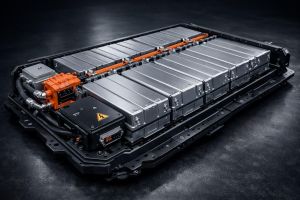
A new examination of electric vehicle (EV) battery data across Europe has provided compelling evidence that modern EV batteries last far longer than many motorists assume.
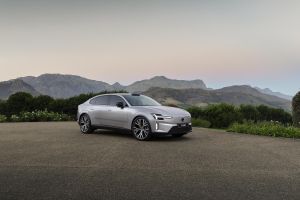
Volvo Cars has introduced the new ES90 in South Africa, positioning it as the brand’s fully electric flagship sedan.