

Funky wheels: China’s big drive in South Africa
No, the Chinese are not coming to take over – they are already busy accomplishing it.
- Industry News
- 4 May 2026
Volvo Car South Africa announced that the latest iteration of its Driving Journal application is now extended to all battery electric vehicle (BEV) models in South Africa.
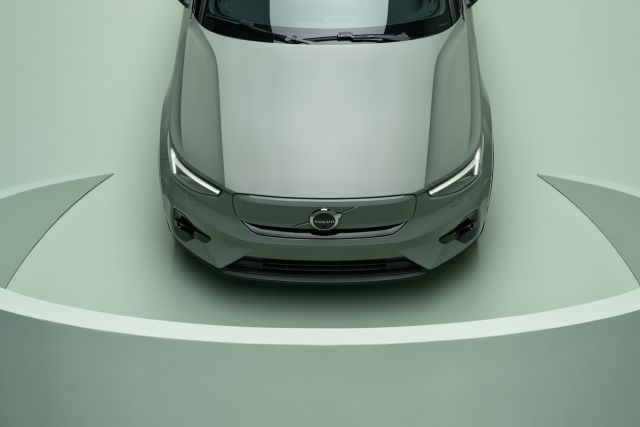
Developed by Volvo Cars, the Android app runs in the background and automatically logs all trips – allowing the user to easily apply for travel reimbursement when it comes to business trips – and is now available locally via Google Play for all Volvo models featuring built-in Google services*.
New to the Swedish luxury brand’s electric cars and housed within the Volvo Cars app, the Driving Journal automatically creates a drive log every time you set off. For each trip, the application logs the starting point, distance, trip duration, destination and even fuel consumption – or, in the case of Volvo’s latest BEVs, battery energy consumption.

At the end of every trip, all information is uploaded to the cloud – in encrypted form and over a secure connection – where it is stored for up to 400 days. Trips can be merged or deleted as well as categorised as either private or business. It is also possible to export the journal directly to a computer or similar smart device, which is especially useful for drivers who need to create business expense reports.
Greg Maruszewski, Managing Director at Volvo Car South Africa, says the local roll-out of the innovative application is just another way the Swedish luxury brand is seeking to make the lives of its customers – including those who own electric vehicles – easier.
“With the release of this latest Driving Journal in-car app for our market, local Volvo drivers of models with built-in Google gain fuss-free access to accurate trip data, all without having to lift a finger. It’s particularly appropriate that this application has been extended to our BEVs as we continue our transition towards electric mobility,” says Greg.
While the Driving Journal is a convenient app for both company-car drivers and those who use their private vehicles for business purposes, its automatic logging of kilometres and fuel use/energy consumption can also help customers plan future trips and even aid in maximising driving efficiency.
No, the Chinese are not coming to take over – they are already busy accomplishing it.

Motorists and households already under pressure will have to dig deeper into their pockets yet again from Wednesday, with sharp fuel and energy price hikes taking effect across South Africa.

Marcia Mayaba, Commercial Director at Dunlop Tyres South Africa, has been recognised as the top achiever at the recently held Woman of Stature Awards South Africa.
 Advertisement
 Advertisement
You can't buy happiness but you can buy cars and that's kind of the same thing.
Unknown
Zero Carbon Charge (CHARGE) welcomes the government’s extension of short term fuel levy relief measures aimed at cushioning consumers from rising fuel prices, but cautions that these interventions do not address the underlying structural challenge facing South Africa’s transport economy.
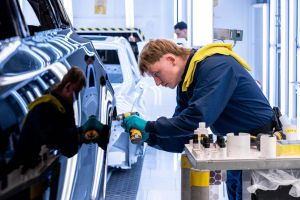
Volvo Cars has started building the fully electric EX60 at its Torslanda factory outside Gothenburg, with first customer deliveries due in early summer.
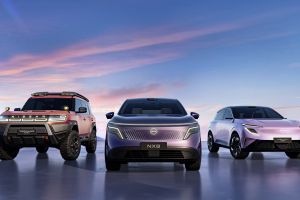
At Auto China 2026, Nissan unveiled two new NEV SUV concept cars, in its accelerated product rollout. It also highlights China’s role as one of the company’s lead markets and a global innovation and export hub, according to Nissan.