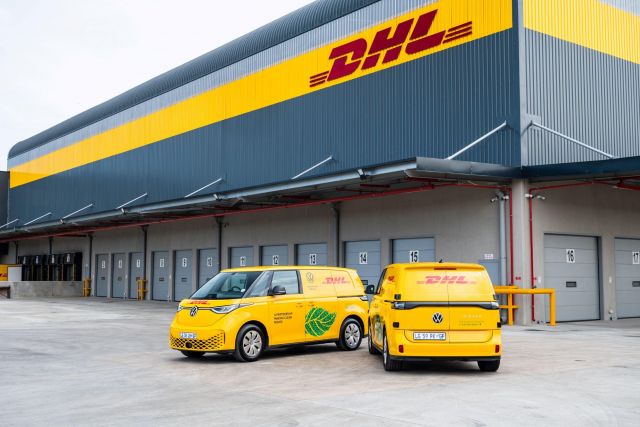
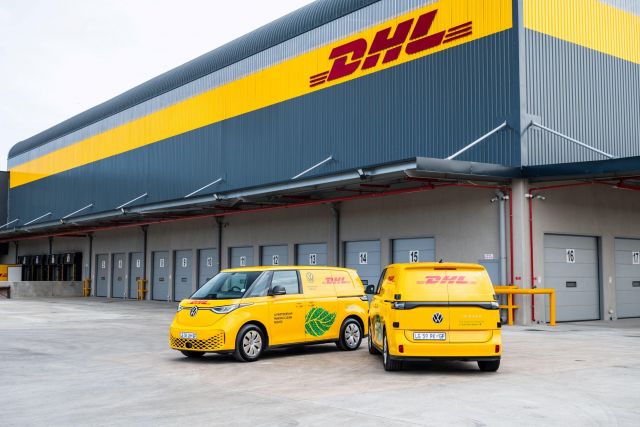
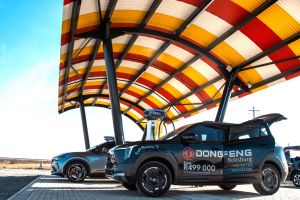
Volkswagen Commercial Vehicles has partnered with DHL Express for the pilot test of the ID.Buzz Cargo fleet in South Africa.
Share with friends
Four ID.Buzz Cargo units will be placed at the DHL Express Service Centres in Johannesburg, Cape Town and Durban for six months. The units will be utilised for specialised last-mile delivery service, which forms part of DHL’s local pilot test of its global zero-emissions logistics target.
The introduction of the ID.Buzz Cargo test fleet is an effort towards the realisation of Volkswagen Group South Africa’s electric-vehicles strategy for the Volkswagen brand in South Africa. The test fleet will assist Volkswagen in building awareness of its electric vehicles in South Africa and to obtain learnings that are key for the brand’s electric-vehicles strategy.
Thomas Milz, Director of Sales and Marketing at VWSA, says: “Our partnership with DHL Express on the ID.Buzz Cargo test fleet marks the beginning of Volkswagen’s long-term plan to gradually introduce its electric vehicles in the local market.
Thomas Milz, Director of Sales and Marketing at VWSA, and Jed Michaletos, MD, DHL Express South Africa, with two of DHL’s ID. Buzz vehicles.
“At the end of the pilot test, we hope to have gathered sufficient information and insights on the readiness of the local market for the introduction of a commercial electric vehicle such as the ID.Buzz Cargo. We are very excited to partner with DHL, which shares a similar commitment of zero emissions by 2050 in accordance with the Paris Climate Agreement.”
“As the world’s leading logistics company, we have a responsibility to set an example in our industry and be a sustainability leader. DHL Express has committed to achieve zero emissions by 2050 through a number of initiatives, one of which is ensuring that we have at least 60% electric vehicles for last-mile deliveries by 2030. We are excited to partner with VWSA to pilot their ID. Buzz in our South African operations,” says Jed Michaletos, MD, DHL Express South Africa, says.
As fuel prices continue to climb across South Africa, many motorists are beginning to question whether owning a car still makes financial sense. With in-land petrol prices now at R26.63 a litre and diesel costs rising sharply in May, transport expenses are placing growing pressure on household budgets.
Pinewood.AI has added two new embedded modules to its Business Intelligence Solution, giving dealers and OEMs greater insight into financial performance and the customer journey, it says.
House lawmakers in the United States (US) have proposed bipartisan legislation that would require electric vehicles (EVs) to pay a R2 227 ($130) fee annually for road repairs, and R578 ($35) for some plug-in hybrid models, according to Reuters.
BYD is exploring the possibility of taking over underused car plants in Europe as it looks to expand its manufacturing base and strengthen its foothold in the region’s electric vehicle (EV) market.