
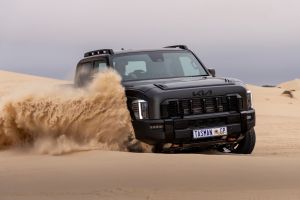
Kia’s Tasman bakkie arrives in South Africa
Kia has taken a bold step into one of South Africa’s most competitive automotive segments with the launch of the Tasman, its first-ever double cab bakkie.
- Product News
- 9 April 2026
Tesla seems to be losing its lead over other vehicle manufacturers in the rush to grow its electric vehicle (EV) market share.
According to a report released by S&P Global Mobility on Tuesday, 29 November, Tesla is losing share to competitors’ models that retail for less than $50 000 (approximately R850 000).
The loss in share comes despite Tesla Inc CEO Elon Musk’s vision of the Model 3 being a “people’s EV”. Currently the Model 3 is retailing for $50 000, while the popular Model Y crossover retails for more than $65 000 (R1.1 million).
According to the report, some of the models retailing at less than $50 000 that are raining on Tesla’s parade include the Ford Mustang Mach-E, Hyundai Ioniq 5, Chevrolet Bolt and Nissan Leaf.
But Tesla is also under fire at the high-end luxury vehicle side of the market.
“Luxury EVs from Mercedes-Benz, BMW, Audi, Polestar, Lucid and Rivian — as well as big-ticket items like the Ford F-150 Lightning, GMC Hummer and Chevrolet Silverado EV [pick-ups] — will plague Tesla at the high end of the market,” says S&P Global.
Currently, Tesla has 65% of the total EV market share in the US followed by Ford (7%), Kia (5%), Hyundai (4%), Chevrolet (4%), Audi (2%), Volkswagen (2%) and Rivian (2%).
In 2020, Tesla’s EV market share was 79% and it is expected that by 2025 it will fall by another 20%, according to the report.
Kia has taken a bold step into one of South Africa’s most competitive automotive segments with the launch of the Tasman, its first-ever double cab bakkie.
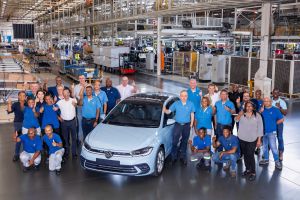
Volkswagen Group Africa (VWGA) has reached another major milestone with the production of the 500 000th unit of the current Polo for the export market.
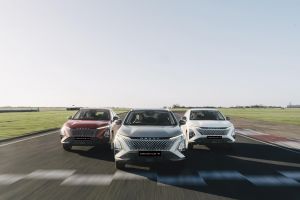
OMODA has expanded its South African lineup with the arrival of the C5 SHS hybrid, a new addition to the C5 range.
 Advertisement
 Advertisement
I have bad reflexes. I was once run over by a car being pushed by two guys
Woody Allen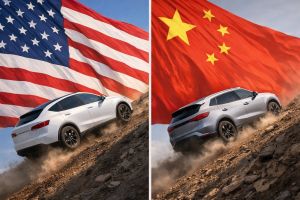
BYD and Tesla, two giants of the electric vehicle industry, are navigating diverging challenges. BYD faces mounting competition in China and questions over its pricing strategy, while Tesla grapples with fading incentives and unsold inventory in the United States.
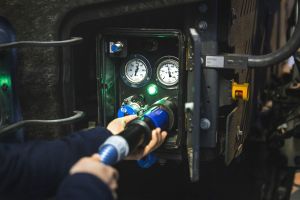
Volvo has commenced on-road testing of heavy trucks powered by hydrogen combustion engines. This pioneering solution places Volvo at the forefront of the industry, with commercial launch planned before 2030.

While rising fuel prices often trigger spikes in interest around electric vehicles, Volvo Car South Africa believes the real reasons South Africans are starting to consider EVs go far beyond the petrol pump.