
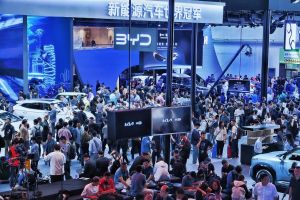
Auto China 2026 promises to be milestone event
Auto China 2026 marks another milestone in the evolution of an event that has tracked China’s rise from emerging market to global automotive powerhouse.
- Industry News
- 16 April 2026
Global automotive manufacturers are recalibrating their ambitions after a costly miscalculation of global demand for electric vehicles.
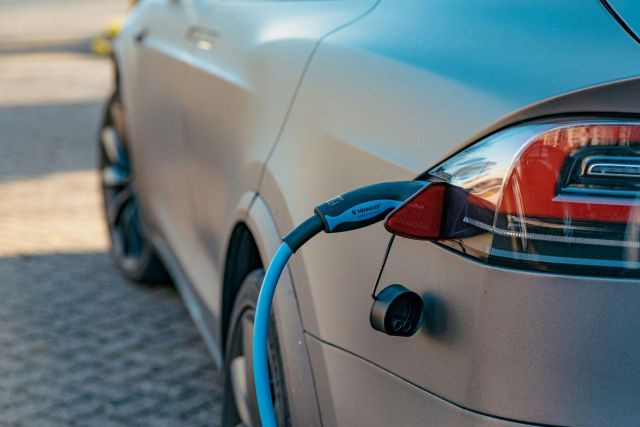
This is according to an original report on the topic in Automotive News.
Across the industry, write‑downs have now reached an estimated R1.03 trillion (±$55 billion) as firms reverse or scale back electrification plans that once seemed unavoidable. This unprecedented financial fallout reflects how far expectations drifted from consumer realities, particularly in markets where infrastructure gaps, high vehicle prices and inconsistent policy signals have stunted adoption.
Stellantis, the world’s fourth‑largest carmaker, has suffered the heaviest blow, posting impairments totalling R490 billion (±$26.2 billion) linked to cancelled electric vehicles (EV) models, factory write‑downs and a sweeping reorganisation of its electrification roadmap.
Investors responded sharply, sending the company’s share price plunging as the extent of over‑investment became clear. The group admits it overestimated both the pace of the energy transition and everyday motorists’ willingness to switch from petrol and diesel vehicles.
Ford’s retreat has been similarly dramatic. After aggressively expanding its EV division, the company has now confirmed losses of about R365 billion (±$19.5 billion), including the scrapping of high‑profile vehicles such as the F‑150 Lightning.
Like its rivals, Ford is pulling resources back towards hybrid and internal‑combustion technologies, hoping these will prove more aligned with consumer budgets in the medium term. General Motors (GM) has also joined the correction, recording R112 billion (±$6 billion) in charges associated with reduced EV output and supplier agreements.
Central to these financial shocks is a slower‑than‑expected shift in buyer behaviour. In the United States, EV market share dipped to 7.8 percent in 2025, down from 8 percent the previous year, undermining industry assumptions that the tipping point for mass adoption was imminent. American policy changes have further complicated matters, with the rollback of EV tax credits and emissions penalties disrupting pricing models and discouraging consumers.
European manufacturers are facing parallel challenges, contending with stringent emissions rules on one hand and softening demand on the other, compounded by pressure from cheaper Chinese competitors.
Honda is another casualty, having written off around R32 billion (±$1.7 billion) in the first nine months of its financial year after early EV ventures failed to gain traction. The company is now undergoing a fundamental review of its EV plans, with senior executives acknowledging they severely misjudged global readiness for fully electric mobility.
Yet despite the upheaval, electrification is not being abandoned. Instead, automakers are entering a more restrained and pragmatic phase, emphasising affordability, flexible powertrain line‑ups and cost‑efficient development.
Toyota’s multi‑path approach, balancing hybrid, electric and petrol models, has gained new relevance, highlighting how diversified strategies may provide the resilience the sector now urgently needs.
Photo: Ernest Ojeh -Unsplash
Auto China 2026 marks another milestone in the evolution of an event that has tracked China’s rise from emerging market to global automotive powerhouse.

Isuzu Motors South Africa (IMSAf) has announced the appointment of Takashi Nishida as its new Chairman (Non-Executive Director), effective 1 April 2026.
Jetour has quickly established itself in South Africa since its arrival in 2024, with the Dashing and X70 Plus paving the way for the rugged T-Series.
 Advertisement
 Advertisement
You can't buy happiness but you can buy cars and that's kind of the same thing.
Unknown
Geely Auto has lifted the curtain on a new hybrid technology that it believes can redraw the balance of power in a segment dominated for decades by Japanese brands.
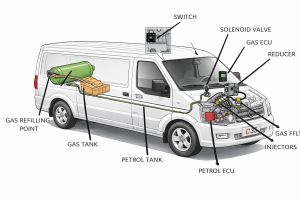
As fuel prices continue to place pressure on South African consumers and businesses, DFSK South Africa has introduced an LPG Autogas conversion solution aimed at reducing operating costs and improving vehicle efficiency across its petrol range.
Toyota Motor Corporation and Isuzu Motors are stepping up plans to bring hydrogen power into Japan’s light‑duty truck market, confirming a jointly developed fuel cell model scheduled for production in the 2027 financial year.