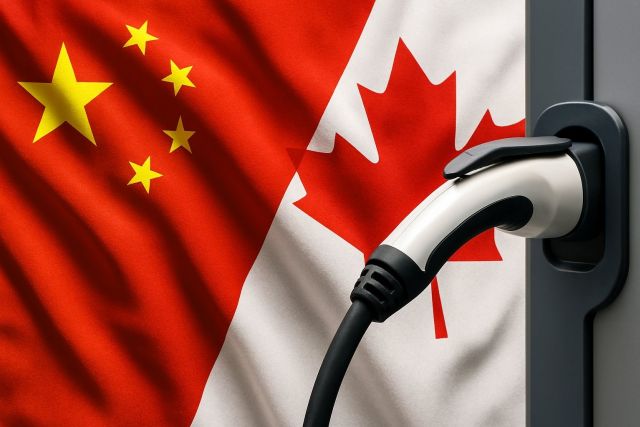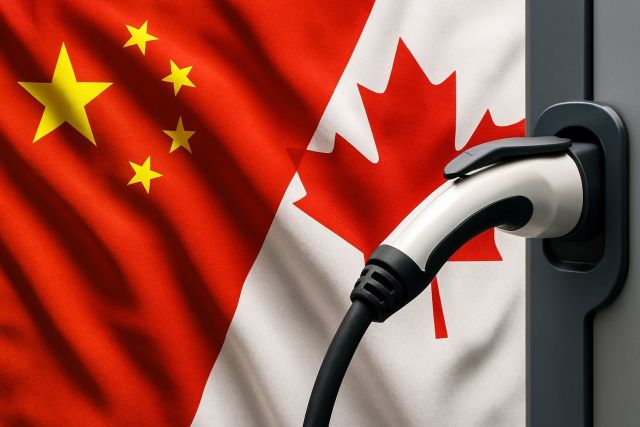
According to Reuters, Canada and China have struck an initial trade agreement that will cut tariffs on electric vehicles (EVs) and, on the agricultural side, canola. Both countries have committed to dismantling trade barriers while forging new strategic ties.
The agreement was reached during a recent visit to China by Canada’s Prime Minister, Mark Carney, the first such visit by a Canadian prime minister since 2017.
Under the deal, Canada will initially allow up to 49 000 Chinese EVs to enter the country at a tariff rate of 6.1% under most-favoured-nation terms.
This compares with the 100% tariff imposed on Chinese electric vehicles by former prime minister Justin Trudeau in 2024, following similar measures taken by the US. In 2023, China exported 41 678 EVs to Canada.
“This is a return to levels prior to recent trade frictions, but under an agreement that promises much more for Canadians,” the prime minister said. He added that the quota would gradually increase, reaching around 70 000 vehicles within five years.
“For Canada to build its own competitive EV sector, we need to learn from innovative partners, gain access to their supply chains, and increase local demand,” he said. This approach marks a clear departure from his predecessor’s position that tariffs were necessary to protect domestic manufacturers from subsidised Chinese competitors.
The decision to ease EV tariffs diverges from US policy, and several members of President Donald Trump’s cabinet criticised the move ahead of an expected review of the US–Canada–Mexico trade agreement.
Ontario Premier Doug Ford, whose province is Canada’s main automotive manufacturing hub, denounced the deal.
“The federal government is inviting a flood of cheap, made-in-China electric vehicles without any real guarantee of equal or immediate investment in Canada’s economy, auto sector or supply chain,” he said in a post on X.
In a statement carried by China’s state-run Xinhua news agency, the two countries pledged to restart high-level economic and financial dialogue, expand trade and investment, and strengthen cooperation in agriculture, oil, gas and green energy.
The Canadian prime minister said his country plans to double its energy grid over the next 15 years, adding that there are opportunities for Chinese partnerships in investments such as offshore wind.
He also said Canada is scaling up its liquefied natural gas (LNG) exports to Asia and aims to produce 50 million tonnes of LNG annually by 2030, all destined for Asian markets.
President Trump has imposed tariffs on some Canadian goods and has suggested that the long-time US ally could become America’s 51st state.
China, also hit by Trump’s tariffs, is keen to deepen cooperation with a Group of Seven nation in what has traditionally been a sphere of US influence.
“In terms of how our relationship with China has developed in recent months, it has become more predictable, and we are seeing tangible results,” the Canadian prime minister added when asked whether China was a more predictable and reliable partner than the US.