

Springboks score tries in Nissan Navara Pro4X
Two leading Springbok rugby players, Aphelele Fassi and Jordan Hendrikse, have taken delivery of their new Nissan Navara Pro4X bakkies in Durban.
- Industry News
- 12 May 2026
China's BYD has officially dethroned Tesla as the world's top electric vehicle seller, marking a watershed moment in the automotive industry's electric revolution. The changing of the guard reflects a fundamental realignment of global EV power dynamics.
In 2025, BYD delivered approximately 2.26 million battery-electric vehicles while Tesla managed just 1.64 million, a gap of over 600 000 units. More troubling for Tesla, this represents the company's second consecutive year of declining sales, with deliveries falling 8.6% year-over-year. BYD, meanwhile, charged ahead with 28% growth.
Tesla's fourth quarter was particularly grim. Deliveries of 418 227 vehicles missed analyst expectations and represented a sharp 15.6% decline from 2024.
Several factors undermined Tesla's market position. The Trump administration's September decision to eliminate the R124 000 federal EV tax credit removed a crucial incentive. After a third-quarter rush to secure the credit, demand evaporated. U.S. EV market share fell to just 6.2% in the fourth quarter, while average transaction prices climbed to R881 200.
Europe proved particularly challenging. Tesla registrations dropped 28% to 203 382 units in the first eleven months of 2025. Intensifying competition from BYD, Volkswagen, and BMW squeezed Tesla's position. CEO Elon Musk's polarizing political involvement also took its toll, with studies suggesting brand backlash cost hundreds of thousands of potential sales.
Tesla's stripped-down "Standard" models priced R82 700 lower disappointed investors hoping for more aggressive action.
BYD's overseas sales topped 1 million vehicles in 2025, a staggering 150% increase from 2024. In the UK alone, sales skyrocketed 576.9%. The Chinese manufacturer outsold Tesla across the EU for multiple months running.
Pricing remains a key weapon. Despite facing 27% combined tariffs in Europe, BYD offers the Dolphin starting at R658 000 compared to Tesla's Model 3 at R760 000. The entry-level Dolphin Surf costs just R426 400.
Beyond pricing, BYD brings product diversity Tesla cannot match. While Tesla derives 95% of sales from two aging models, BYD spans every segment with dozens of offerings. The company's vertical integration, particularly in-house battery production, provides crucial cost advantages.
BYD is also building global manufacturing footprints, with European facilities in Hungary and Turkey expected to produce 500,000 units annually by 2027.
BYD targets 1.6 million overseas sales in 2026. Tesla faces harder choices. Despite falling deliveries, Tesla shares rose 11.4% in 2025 as investors focus on Musk's robotaxi and humanoid robot ambitions rather than car sales.
The EV throne has a new occupant, and BYD shows no signs of relinquishing it.
Two leading Springbok rugby players, Aphelele Fassi and Jordan Hendrikse, have taken delivery of their new Nissan Navara Pro4X bakkies in Durban.

Dealership service departments know the pattern: the moment warranties and service plans expire; a portion of owners quietly migrate to the independent aftermarket.

Mercedes-Benz Vans South Africa announced its top-performing Agents and Dealers for 2025, recognising their exceptional dedication, customer service and commitment to the brand.
 Advertisement
 Advertisement
You can't buy happiness but you can buy cars and that's kind of the same thing.
Unknown
Opel has unveiled a key project under development in its model strategy: a completely new, all-electric SUV in the important and highly competitive C-segment that would extend the current line-up.
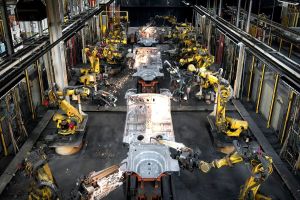
Nissan’s decision to drop a planned $500 million investment in electric vehicle (EV) production at its Canton, Mississippi plant is the latest indication that established manufacturers are reassessing how quickly the market will shift to battery power.
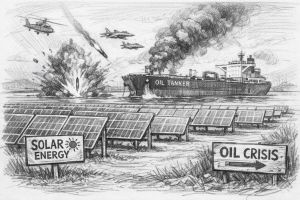
Zero Carbon Charge (CHARGE) welcomes the government’s extension of short term fuel levy relief measures aimed at cushioning consumers from rising fuel prices, but cautions that these interventions do not address the underlying structural challenge facing South Africa’s transport economy.