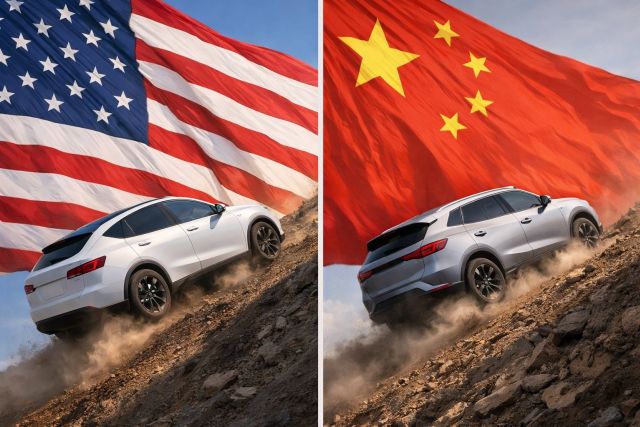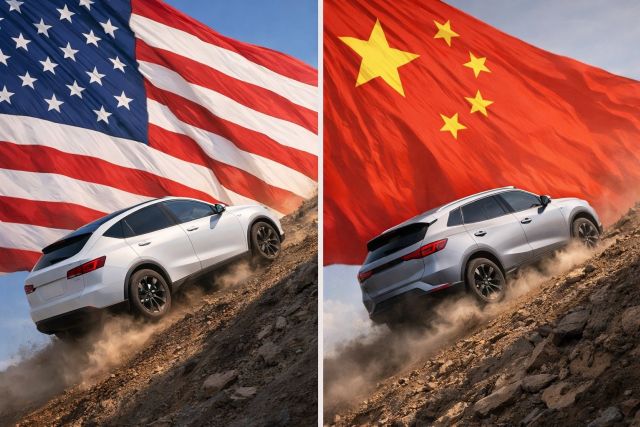
Both companies, however, continue to look abroad and beyond the auto sector for growth, underscoring the shifting dynamics of the global EV market.
BYD’s struggles in China:
BYD, China’s largest electric vehicle (EV) maker, has reported its seventh consecutive monthly sales decline in March.
Sales fell 20.5% year-on-year to 300 222 vehicles, easing from a 41.1% drop in February. First-quarter sales were down 30% compared with the previous year. According to Reuters calculations based on a Weibo post by BYD executive Li Yunfei and company filings, the decline underscores the mounting pressure from domestic rivals such as Geely and Leapmotor.
The company has attempted to respond by launching its first major battery upgrade in six years. However, the new lineup, priced above R354 000 (150 000 yuan or $21,721 USD), has raised doubts about its ability to attract buyers in China’s hyper-competitive market where cheaper models remain more popular. BYD’s margins fell last year as its annual profit declined for the first time in four years, missing estimates.
Despite these challenges at home, overseas sales remain a bright spot. BYD sold 320 673 vehicles abroad in the first quarter, accounting for 45.8% of its total sales. The company has expressed confidence in meeting its 2026 overseas sales target of 1.5 million vehicles. As Reuters reported, BYD is “highly confident” of achieving this goal.
Tesla’s weakness in the United States (US):
Tesla, meanwhile, has faced its own difficulties on home turf. The company delivered 358 023 vehicles in the first quarter of 2026, missing analysts’ estimates of 368 903. Deliveries were up 6.3% from a year earlier, but the figures fell short of expectations. Shares dropped more than 4% following the announcement, adding to a 15% decline earlier in the year according to Reuters.
The automaker produced 50 363 more vehicles than it delivered during the quarter, the widest gap in at least four years. This signals a build-up of unsold inventory. Camelthorn Investments adviser Shawn Campbell comments, “I believe the inventory build is due to both the new normal of the EV (tax credit) expiration and growing threat of competition as well as the need for lower interest rates to drive consumer demand.”
The expiry of a R122 200 ($7 500 USD) federal tax credit in the US at the end of September has dealt a blow to demand, stripping away a key incentive for buyers. Approval of Tesla’s Full Self-Driving system in Europe has also been delayed, with a Dutch decision expected soon that could unlock wider rollout.
Seth Goldstein, analyst at Morningstar, notes, “Tesla’s first-quarter deliveries reflect the US tax credit expiration as well as Full Self-Driving (FSD) not yet being approved in the European Union (EU). These factors will likely continue to weigh on deliveries until Tesla gets EU approval and until we enter the fourth quarter in the US.”
Competition and Market Dynamics
Tesla lost its global EV sales crown last year to BYD, highlighting the intensifying competition between the two companies. While BYD struggles in China, Tesla has seen growth in its China-made vehicle sales, which rose 23.5% year-on-year in the first quarter. BYD does not sell passenger electric vehicles to consumers in the United States.
Europe, which weighed on Tesla’s figures last year, has shown signs of stabilisation, with growth in markets such as France.
Smaller rival Rivian Automotive delivered more vehicles than analysts expected in the first quarter, adding further pressure on Tesla. Analysts warn that Tesla could face a third consecutive year of delivery declines.