
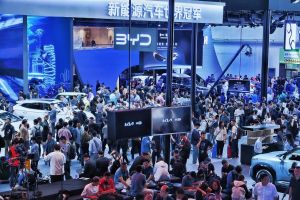
Auto China 2026 promises to be milestone event
Auto China 2026 marks another milestone in the evolution of an event that has tracked China’s rise from emerging market to global automotive powerhouse.
- Industry News
- 16 April 2026
According to Reuters, BMW reported on 15 March that the company expected over 50% of new sales to be all-electric vehicles.
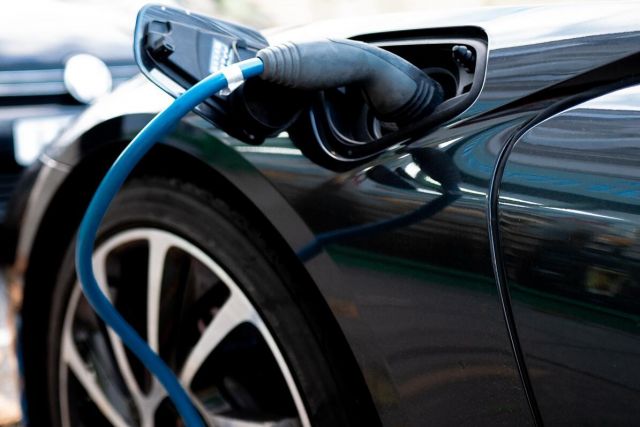
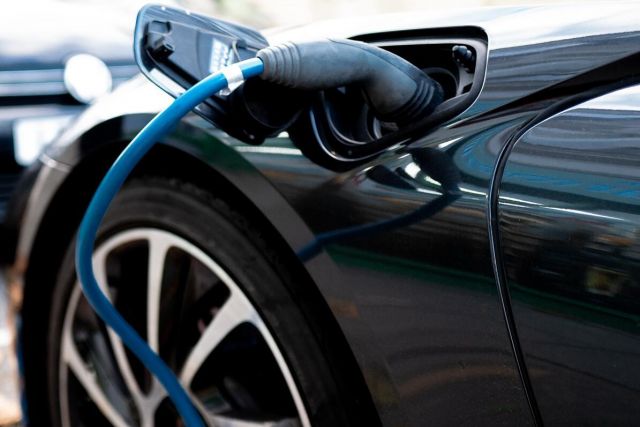
This is well ahead of its 2030 target. The company also hinted that a hydrogen-powered car could be going into production in the second half of the decade.
The carmaker forecast slightly higher deliveries and an 8%-10% margin for the year, up from its 7%-9% target in 2022, but cautioned that it still expected high costs from supply chain troubles and had not factored in a deep recession in its key markets into its outlook.
BMW finance chief Nicolas Peter, who is due to retire later this year, said he expected energy and chip supply to stabilise but still predicted significant cost burdens from logistics bottlenecks and high raw material prices.
The company said it planned to keep prices stable, after years of dealing with rising costs by passing them on to customers.
The forecast chimes with a broadly cautious tone across the auto industry hoping for a stronger 2023 but still keenly aware of supply chain problems, high inflation in Europe and uncertainty over China's post-pandemic economic recovery.
Still, car makers across the board were optimistic about the growth of their battery-electric vehicle segment, with BMW predicting a fourth of new sales would be all-electric by 2025, rising to a third by 2026 - an ambitious leap from the 1-in-11 ratio seen last year.
One of the most prominent advocates among carmakers of hydrogen fuel-cell technology as a worthwhile option alongside battery-powered cars, Chief Executive Oliver Zipse said he could also envisage a hydrogen-powered vehicle going into production by mid-decade.
Key to making that happen is an expansion of the hydrogen-fuelling network, which was mainly in the hands of the heavy vehicle transport industry, development chief Frank Weber added at a press conference dedicated to the company's annual results.
"We see hydrogen-electric vehicles as a meaningful complement to e-mobility, even with something of a time lag," Zipse said.
The BMW iX5 Hydrogen test vehicle, with a range of 500 km and an ability to refuel in three to four minutes, was being tested in various countries, BMW said in a statement.
Auto China 2026 marks another milestone in the evolution of an event that has tracked China’s rise from emerging market to global automotive powerhouse.
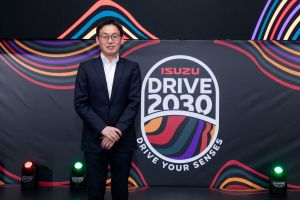
Isuzu Motors South Africa (IMSAf) has announced the appointment of Takashi Nishida as its new Chairman (Non-Executive Director), effective 1 April 2026.
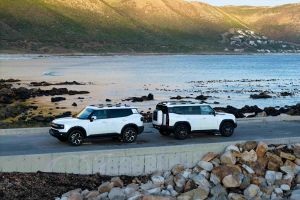
Jetour has quickly established itself in South Africa since its arrival in 2024, with the Dashing and X70 Plus paving the way for the rugged T-Series.
 Advertisement
 Advertisement
Have you ever noticed that anybody driving slower than you is an idiot, and anyone going faster than you is a maniac?
George Carlin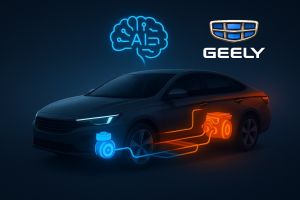
Geely Auto has lifted the curtain on a new hybrid technology that it believes can redraw the balance of power in a segment dominated for decades by Japanese brands.
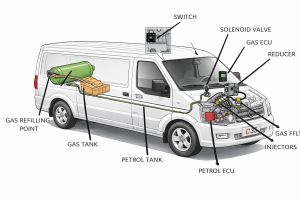
As fuel prices continue to place pressure on South African consumers and businesses, DFSK South Africa has introduced an LPG Autogas conversion solution aimed at reducing operating costs and improving vehicle efficiency across its petrol range.
Toyota Motor Corporation and Isuzu Motors are stepping up plans to bring hydrogen power into Japan’s light‑duty truck market, confirming a jointly developed fuel cell model scheduled for production in the 2027 financial year.