
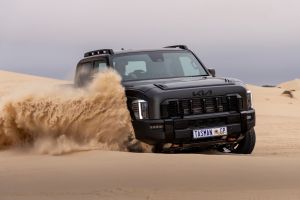
Kia’s Tasman bakkie arrives in South Africa
Kia has taken a bold step into one of South Africa’s most competitive automotive segments with the launch of the Tasman, its first-ever double cab bakkie.
- Product News
- 9 April 2026
This past Thursday, Reuters reported that Austrian Climate Minister, Leonore Gewesseler, said that the country would not back out of the agreement to support the EU law to phase out new sales of CO2-emmiting cars by 2035.

The EU's landmark law to accelerate Europe's shift to clean vehicles is currently on hold after Germany declared last-minute opposition, despite EU countries and lawmakers approving the law last year.
"Together with most of EU member states, we reached a compromise on the transition to admitting only 100% emission-free new cars. I see no reason to change this position. The EU needs to be a reliable partner," Gewessler said on her arrival at a meeting of EU environment ministers in Brussels.
Austrian Chancellor Karl Nehammer last week said he would oppose banning the combustion engine if the debate was escalated to EU country leaders.
An Austrian official confirmed, however, that responsibility for the government's position on the car CO2 law lies with the climate ministry, which already approved the EU deal.
EU country leaders will be meeting in Brussels later this week (23 March). The auto CO2 emissions law is not currently on the meeting's agenda.
The EU says the 2035 date is crucial because the average lifespan of new cars is 15 years – so a later ban would stop the EU reaching net zero emissions by 2050, the global milestone scientists say would avert disastrous climate change.
The EU law will not explicitly outlaw combustion engines, but by requiring all new cars sold from 2035 to have zero CO2 emissions, it will make it effectively impossible to sell new combustion engine cars.
Germany, backed by countries including Italy and the Czech Republic, wants assurances that new cars with internal combustion engines can still be sold after 2035, if they run on CO2-neutral fuels, so-called e-fuels.
Some carmakers are also pushing for the exemption, including sports car makers, such as Porsche who see e-fuels as a way to avoid weighing down their high-performance vehicles with batteries.

Kia has taken a bold step into one of South Africa’s most competitive automotive segments with the launch of the Tasman, its first-ever double cab bakkie.
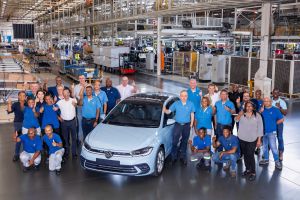
Volkswagen Group Africa (VWGA) has reached another major milestone with the production of the 500 000th unit of the current Polo for the export market.
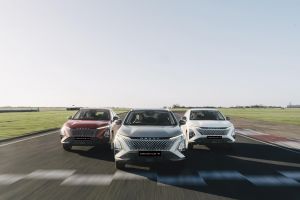
OMODA has expanded its South African lineup with the arrival of the C5 SHS hybrid, a new addition to the C5 range.
 Advertisement
 Advertisement
Have you ever noticed that anybody driving slower than you is an idiot, and anyone going faster than you is a maniac?
George Carlin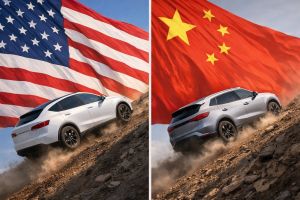
BYD and Tesla, two giants of the electric vehicle industry, are navigating diverging challenges. BYD faces mounting competition in China and questions over its pricing strategy, while Tesla grapples with fading incentives and unsold inventory in the United States.
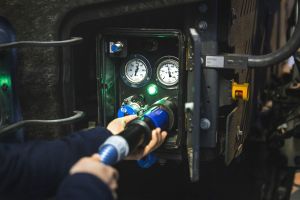
Volvo has commenced on-road testing of heavy trucks powered by hydrogen combustion engines. This pioneering solution places Volvo at the forefront of the industry, with commercial launch planned before 2030.

While rising fuel prices often trigger spikes in interest around electric vehicles, Volvo Car South Africa believes the real reasons South Africans are starting to consider EVs go far beyond the petrol pump.