
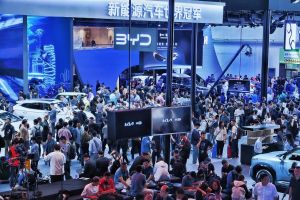
Auto China 2026 promises to be milestone event
Auto China 2026 marks another milestone in the evolution of an event that has tracked China’s rise from emerging market to global automotive powerhouse.
- Industry News
- 16 April 2026
Audi South Africa remains steadfast in its commitment to be a major player in the drive to bring South Africa up to speed in the sustainable energy and electric vehicle (EV) arenas.
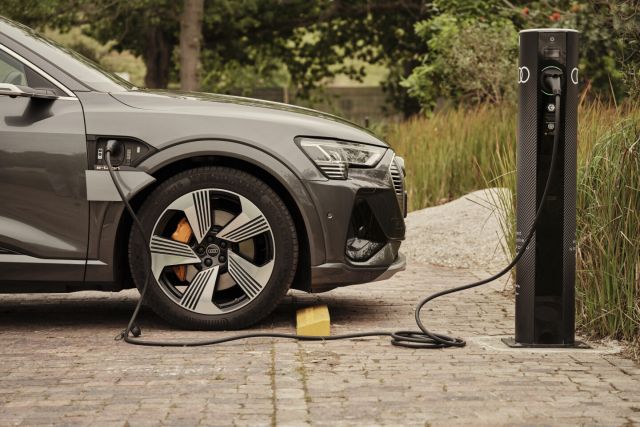
In partnership with Rubicon, the group has brought 43 additional EV-charging stations online across the country. These chargers can accommodate a total of 57 EV cars simultaneously, at varying capacities, regardless of the model or brand ownership. This is in addition to the brand’s contribution of 70 EV-charging connection points nationwide a year ago, when Audi was the first to bring ultra-fast chargers to South Africa.
The latest roll-out includes the very first DC 200kW ultra-fast charger in South Africa, which is installed at the Mall of Africa – enabling compatible cars to be charged ultra-fast. The EV battery of an e-tron GT can be recharged within 15 minutes*. The solar photovoltaic (PV) system installed at the Mall of Africa is one of the largest of its kind in the Southern hemisphere, making this installation a progressive statement towards sustainable charging.
The rest of this second phase of infrastructure investment comprises four 100kW (DC), eight 60kW (DC), five 25kW (DC) and twenty-five 22kW (AC) fast EV-charger installations at convenient locations across the country to serve all EV customers. The commissioning of the first and second phase of charging infrastructure means that Audi and partners GridCars and Rubicon, have installed 76 fast and ultra-fast EV chargers across South Africa, representing about 28% of public charging stations in the country.
The partnership between Audi, GridCars and Rubicon includes a roaming agreement, which allows billing cards to be interoperable across the two networks, making charging even easier, seamless and accessible for Audi e-tron customers and users of other EV brands.
The newly added 43 chargers are spread across the provinces as follows:
Gauteng |
15 |
W Cape |
11 |
E Cape |
10 |
KZN |
4 |
Mpumalanga |
2 |
Free State |
1 |
Total |
43 |
All 76 Audi-branded charging stations are part of the charging network that can be accessed here: https://www.chargestations.co.za/oemportal/audi/
* All charging times are approximations as charging time is not linear and depends on a vehicle’s state of charge, on-board charger, battery capacity and other factors such as ambient temperature, driving style, etc.
Auto China 2026 marks another milestone in the evolution of an event that has tracked China’s rise from emerging market to global automotive powerhouse.

Isuzu Motors South Africa (IMSAf) has announced the appointment of Takashi Nishida as its new Chairman (Non-Executive Director), effective 1 April 2026.
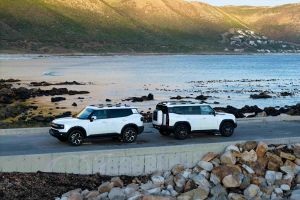
Jetour has quickly established itself in South Africa since its arrival in 2024, with the Dashing and X70 Plus paving the way for the rugged T-Series.
 Advertisement
 Advertisement
You can't buy happiness but you can buy cars and that's kind of the same thing.
Unknown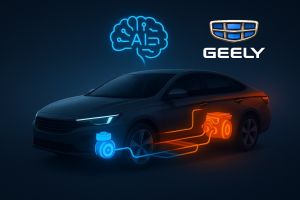
Geely Auto has lifted the curtain on a new hybrid technology that it believes can redraw the balance of power in a segment dominated for decades by Japanese brands.
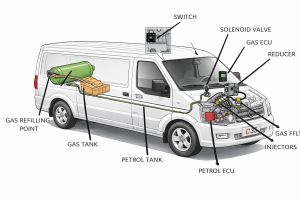
As fuel prices continue to place pressure on South African consumers and businesses, DFSK South Africa has introduced an LPG Autogas conversion solution aimed at reducing operating costs and improving vehicle efficiency across its petrol range.

Toyota Motor Corporation and Isuzu Motors are stepping up plans to bring hydrogen power into Japan’s light‑duty truck market, confirming a jointly developed fuel cell model scheduled for production in the 2027 financial year.