
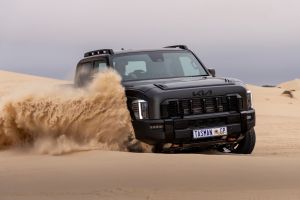
Kia’s Tasman bakkie arrives in South Africa
Kia has taken a bold step into one of South Africa’s most competitive automotive segments with the launch of the Tasman, its first-ever double cab bakkie.
- Product News
- 9 April 2026
This past Tuesday (15 November), Ford Motor Company CEO, Jim Farley, made a thrilling claim, saying the manufacturing of electric vehicles would need 40% less labour than internal combustion engine (ICE) vehicles.
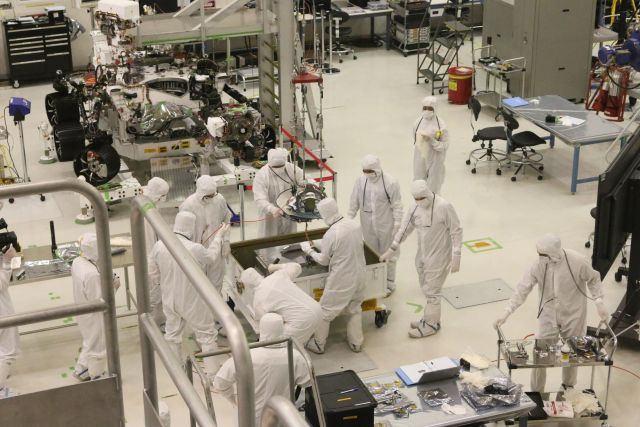
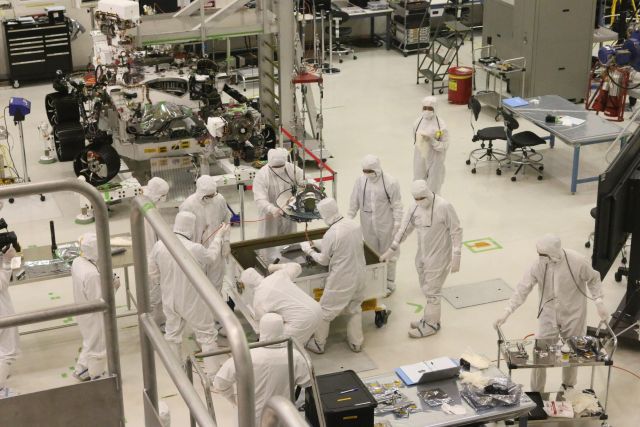
By now it has become part of EV lore that the maintenance of these vehicles will be much cheaper owing to the simplicity of EVs compared to their fossil-fuel counterparts. But Farley’s claim, which follows that simplicity also means simplicity in production, has not often been discussed.
Farley, speaking at a conference in Detroit, said this meant the company has to pursue more vertical integration by retraining workers instead of laying them off in order for Ford to manufacture more parts in-house. This will hark back to the heydays of Ford when Henry Ford owned forests, iron mines, limestone quarries and even a rubber plantation in Brazil in an attempt to wholly control the company’s supply chain.
Farley said: “If Henry Ford came back to life, he would have thought the last 60 years weren’t that exciting, but he would love it right now because we’re totally reinventing the company.”
In the light of Ford’s target of reaching 50% EV sales by 2030, Farley acknowledged that the transition would be challenging and that there would be “storm clouds”.
Farley pointed out that the battery production process was one area where jobs could be added and workers could be retrained.
Kia has taken a bold step into one of South Africa’s most competitive automotive segments with the launch of the Tasman, its first-ever double cab bakkie.
Volkswagen Group Africa (VWGA) has reached another major milestone with the production of the 500 000th unit of the current Polo for the export market.
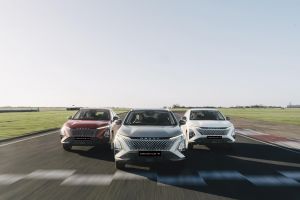
OMODA has expanded its South African lineup with the arrival of the C5 SHS hybrid, a new addition to the C5 range.
 Advertisement
 Advertisement
Have you ever noticed that anybody driving slower than you is an idiot, and anyone going faster than you is a maniac?
George Carlin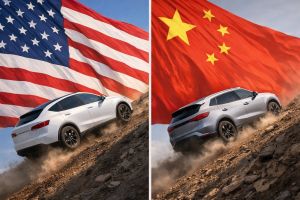
BYD and Tesla, two giants of the electric vehicle industry, are navigating diverging challenges. BYD faces mounting competition in China and questions over its pricing strategy, while Tesla grapples with fading incentives and unsold inventory in the United States.
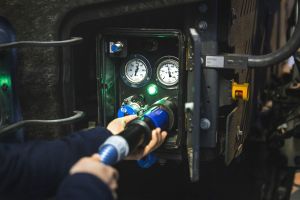
Volvo has commenced on-road testing of heavy trucks powered by hydrogen combustion engines. This pioneering solution places Volvo at the forefront of the industry, with commercial launch planned before 2030.

While rising fuel prices often trigger spikes in interest around electric vehicles, Volvo Car South Africa believes the real reasons South Africans are starting to consider EVs go far beyond the petrol pump.