
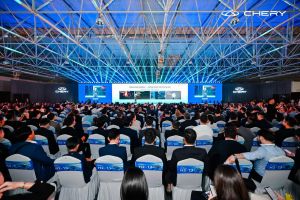
Funky wheels: China’s big drive in South Africa
No, the Chinese are not coming to take over – they are already busy accomplishing it.
- Industry News
- 4 May 2026
This past Tuesday (15 November), Ford Motor Company CEO, Jim Farley, made a thrilling claim, saying the manufacturing of electric vehicles would need 40% less labour than internal combustion engine (ICE) vehicles.
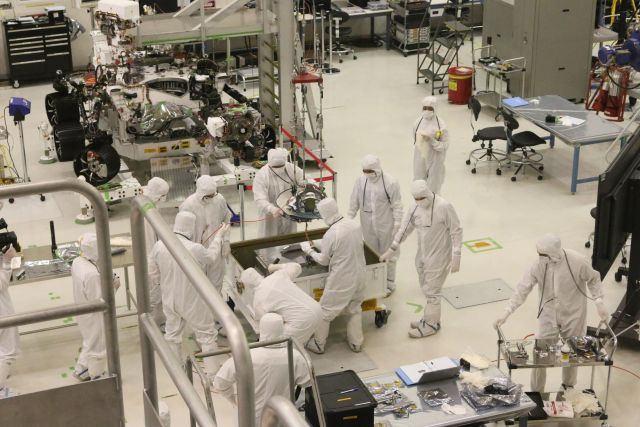
By now it has become part of EV lore that the maintenance of these vehicles will be much cheaper owing to the simplicity of EVs compared to their fossil-fuel counterparts. But Farley’s claim, which follows that simplicity also means simplicity in production, has not often been discussed.
Farley, speaking at a conference in Detroit, said this meant the company has to pursue more vertical integration by retraining workers instead of laying them off in order for Ford to manufacture more parts in-house. This will hark back to the heydays of Ford when Henry Ford owned forests, iron mines, limestone quarries and even a rubber plantation in Brazil in an attempt to wholly control the company’s supply chain.
Farley said: “If Henry Ford came back to life, he would have thought the last 60 years weren’t that exciting, but he would love it right now because we’re totally reinventing the company.”
In the light of Ford’s target of reaching 50% EV sales by 2030, Farley acknowledged that the transition would be challenging and that there would be “storm clouds”.
Farley pointed out that the battery production process was one area where jobs could be added and workers could be retrained.
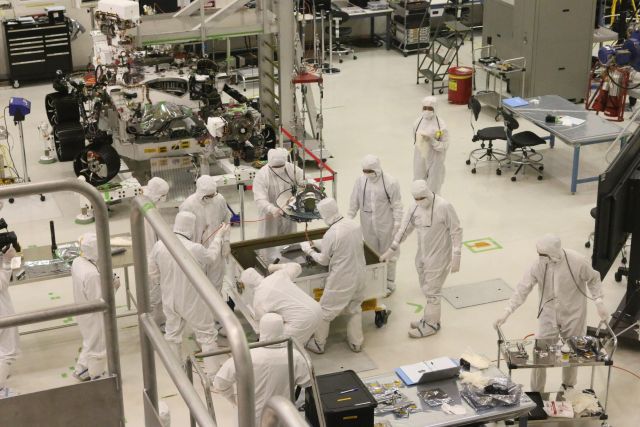
No, the Chinese are not coming to take over – they are already busy accomplishing it.
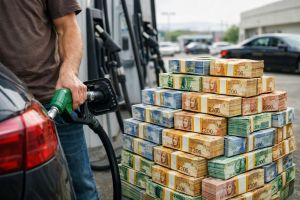
Motorists and households already under pressure will have to dig deeper into their pockets yet again from Wednesday, with sharp fuel and energy price hikes taking effect across South Africa.

Marcia Mayaba, Commercial Director at Dunlop Tyres South Africa, has been recognised as the top achiever at the recently held Woman of Stature Awards South Africa.
 Advertisement
Advertisement
Advertisement
I have bad reflexes. I was once run over by a car being pushed by two guys
Woody Allen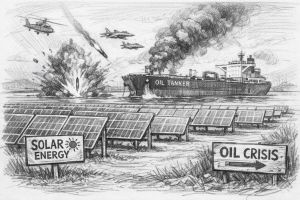
Zero Carbon Charge (CHARGE) welcomes the government’s extension of short term fuel levy relief measures aimed at cushioning consumers from rising fuel prices, but cautions that these interventions do not address the underlying structural challenge facing South Africa’s transport economy.
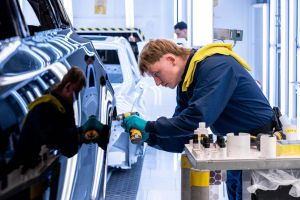
Volvo Cars has started building the fully electric EX60 at its Torslanda factory outside Gothenburg, with first customer deliveries due in early summer.
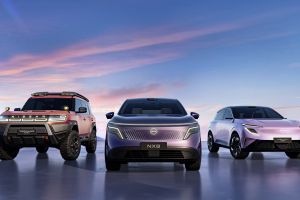
At Auto China 2026, Nissan unveiled two new NEV SUV concept cars, in its accelerated product rollout. It also highlights China’s role as one of the company’s lead markets and a global innovation and export hub, according to Nissan.