There is no doubt that the industry has changed in recent years and by all accounts this new way of doing business is going to continue for a long time. So, it is a case of adapt to survive and thrive.
Share with friends
This is the according to Burrie Smit, owner of Yellowstone Auto and winner of the Absa Golden Partner Award for Non-Franchise dealers in the large category.
Burrie and his Yellowstone dealership with three branches are no newcomers to winning awards.
“We have won this accolade three times before, although in different class-size categories. The performance of all three our branches – Randfontein, Rustenburg and Randburg – is taken into account,” he tells Dealerfloor.
Heidi Prinsloo (F&I) and Burrie Smit, owners of Yellowstone Auto with the winning trophy.
“We are proud of this, and it showcases dealerships that perform well on all levels to achieve this prestigious feat. We have an excellent relationship with Absa, and an award like this also indicates to prospective customers that we are serious about business and service.
“Getting good, pre-owned stock today remains a challenge for all the, by now, obvious reasons, and in our trade, you have to make sure what you buy. We have three branches, which help tremendously in the variety of stock we have. Furthermore, I have established a good network consisting of other friends in the motor industry and dealerships that we can count on when we’re looking for stock or a specific model.
The well-known Lion landmark in Randfontein at the Yellowstone Auto complex where Burrie started his first motor retail outlet.
“It is also of the utmost importance when you advertise a vehicle and have more than one enquiry to treat everyone interested as a customer. The rest of the people who enquired and did not get the opportunity to buy that car, are all potential customers. We go out of our way to retain them and find a vehicle for them,” Burrie tells us.
He says although certain models or body styles might be more popular, he believes in variety across the spectrum as customers are broad based when looking for a good, clean used vehicle.
Burrie Smit.
Burrie told us that when the opportunity presented itself, he left the mining industry for the motor trade. In 1995, he bought premises and built a complex in which the first Yellowstone car dealership was housed. Later on, he expanded the business with branches in Randburg and Rustenburg.
Today he has three Dealer Principals, looking after each branch while he moves between the three Yellowstone dealerships. “Good, reliable staff are our secret to success, especially if you cannot be everywhere at once. Providing a good customer service is important to us as it ensures business growth with repeat business and establishing a solid reputation in the industry,” according to Burrie.
Mitsubishi Motors South Africa has announced the appointment of Bilal Akoojee as its new Chief Financial Officer, bringing a wealth of financial and commercial leadership experience to the brand as it continues to strengthen its position in the local automotive market.
Continental's consideration of ending tyre production at its Gqeberha factory has placed the future of local tyre manufacturing under renewed scrutiny, just 15 months after Goodyear announced the closure of its manufacturing operation in Kariega.
South Africa’s new vehicle market continues to outperform expectations, delivering sustained growth even as households contend with ongoing financial challenges. The trend suggests that consumers increasingly view vehicle ownership as a necessity rather than a discretionary purchase.
Cars are the ultimate symbol of freedom, independence and individualism. They offer the freedom to ‘go anywhere,’ whenever it suits and with whom one chooses.
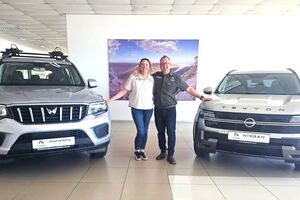
Running a dealership together as husband and wife has its challenges, but it also brings a unique set of advantages. For Pierre and Simóne du Plessis, working side by side is something they genuinely enjoy, provided they know when to separate business from family life.
For many South Africans, the idea of owning an electric vehicle (EV) is appealing, but questions about charging, electricity costs, range and the practicalities of everyday use can make the decision difficult.