
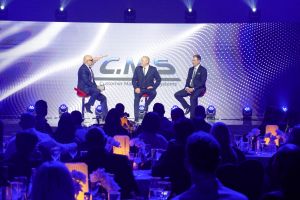
CMS Systems marks 25 years in automotive retail technology
CMS Systems is celebrating 25 years in business, marking a significant milestone for a company that has become a central player in automotive retail technology.
- Industry News
- 24 April 2026
In an era when a vehicle purchase can be completed entirely online, from selecting trim levels to signing contracts digitally, the vast majority of South Africans continue to favour physical showrooms over virtual platforms.

Recent sales data from the Automotive Business Council | naamsa underscores this trend. Of the 48 983 vehicles sold locally in December 2025, a striking 90.8% were transacted through dealer channels. This confirms that while digital tools continue to evolve, the dealership remains the cornerstone of South Africa’s automotive landscape.
Brandon Cohen, chairperson of the National Automobile Dealers’ Association (NADA), notes that although technology has streamlined the research phase, it has not replaced the need for human interaction.
“Despite rapid technological advances and the rise of virtual dealerships, South Africans still value the local dealer experience,” Brandon says. “While convenience drives online research by allowing buyers to compare models with just a few clicks, it does not negate the essential ‘human touch’ required for such a significant purchase.”
The 2026 Deloitte Global Automotive Consumer Study supports this view. The research found that dealer visits and manufacturer websites remain the most trusted information sources globally for consumers considering a vehicle purchase.
According to the study, buyers’ top priorities include securing a competitive deal through negotiation, transparent pricing, physically interacting with the vehicle, and having complex questions answered in real time by an expert.
“This underscores the fact that consumers prefer dealing with people rather than bots,” Brandon adds. “They value the ability to engage, negotiate and physically experience the product. These are sensory and emotional requirements that a screen simply cannot replicate.”
Interestingly, while the Deloitte study shows that the option to complete parts of the buying process virtually is appreciated, it ranks significantly lower among buyer priorities than the in-person experience.
Looking ahead to the year ahead, the industry remains optimistic. “As we enter the 2026 sales cycle, we aim to build on the momentum of 2025, which saw the local new-vehicle market reach its highest level in nearly two decades,” he concludes. “The dealership sector will continue to be the primary engine driving the recovery and long-term growth of South Africa’s automotive industry.”

CMS Systems is celebrating 25 years in business, marking a significant milestone for a company that has become a central player in automotive retail technology.
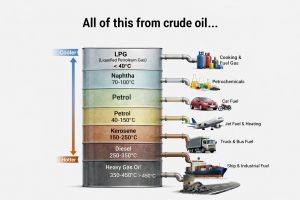
Oil prices jumped on Wednesday after Iran's seizure of container ships in the strait.
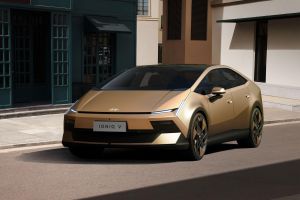
Hyundai Motor is preparing an aggressive comeback in China, unveiling plans to launch 20 new vehicles over the next five years as it tries to rebuild its position in the world’s largest car market.
 Advertisement
 Advertisement
I have bad reflexes. I was once run over by a car being pushed by two guys
Woody Allen
Innovation met mobility as Hyundai Pinetown redefined industry benchmarks by hosting a historic live outside radio broadcast from a moving vehicle.
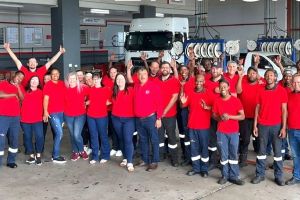
In the rolling expanse of Mpumalanga’s Highveld, where transport routes cut through farmland and industrial corridors, UD Trucks Ermelo has become a familiar name.
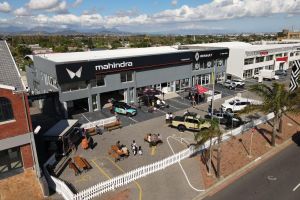
Motus Retail has officially opened its first dedicated Mahindra dealership in the Western Cape, located in Tygervalley. Martin Smit will lead the team as Dealer Principal.