August sales up on July, but market remains under pressure
New vehicle sales, as reported by Naamsa, improved from a slow July but they remain significantly below last year’s figures.
Share with friends
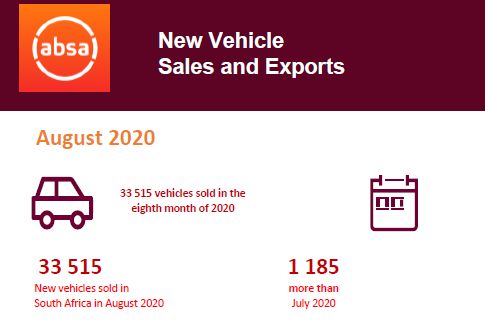
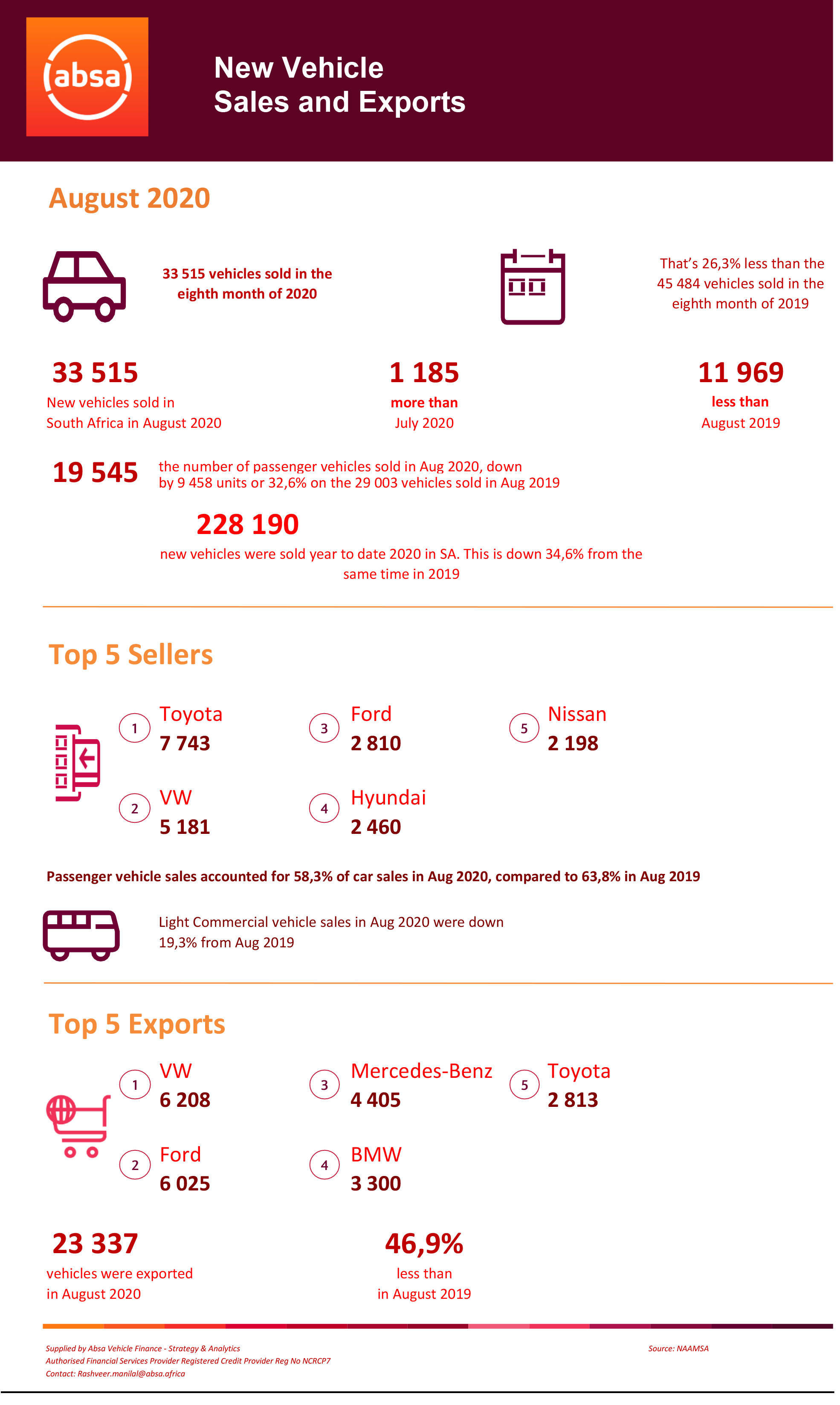
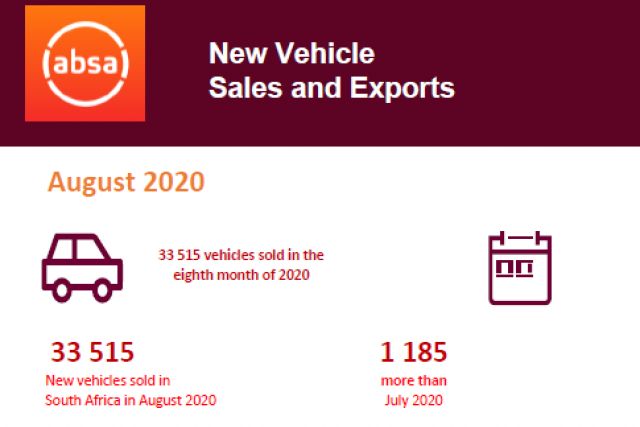
According to Naamsa, the industry sold 33 515 cars, light commercial vehicles and trucks in August. This is 3.6% up on July, but a massive 26.3% or 11 969 units down on the same month last year. To date, the industry has sold 228 190 vehicles, compared with 349 150 in the same period to August 2019.
The dealer network remains the driving force of this market, selling 92.1% of all vehicles. The remainder is made up of government sales (4.2% or 1 419 units), single unit sales (sold by OEMs to themselves for staff, marketing or other purposes) of 2.9% or 969 units and mere 252 units or 0.8% to the vehicle rental industry.
All eyes have been on the rental industry, since it’s slowly returning to business under Level 2 lockdown and it contributed 12.6% of all sales in August last year. The summer season is usually the busiest time for the industry and sales made usually pick up any slack left by government sales.
Unfortunately, this is not the case this year. Naamsa notes, for instance, that the entire fleet market only purchased 8 passenger vehicles last month.
Both Toyota, the overall market leader, and Volkswagen, the passenger vehicle leader, had better months than before. Toyota (including Lexus and Hino) sold 7 743 units, of which 2 494 units were passenger vehicles. Volkswagen, in turn, sold 5 181 units, of which 4 854 units were passenger vehicles.
The remainder of the top five were made up by Ford (2 810 units), Hyundai (2 460 units) and Nissan (2 198 units).
The following models were the respective passenger vehicle top-sellers. Ford sold 476 EcoSport models, Hyundai retailed 526 i20 models, VW handed over 1 586 Polo Vivo models to customers, and Nissan sold 190 X-Trails. Toyota sold 733 Fortuners, its top selling passenger vehicle model.
In the hotly contested passenger vehicle market, Toyota sold 3 613 Hilux models, followed by 1 670 Isuzu D-MAX models and 1 657 Ford Rangers. Nissan sold 863 NP300 and Volkswagen sold 134 Amaroks. Interestingly, Mahindra is climbing steadily with 369 Pik Up models from its new assembly line in Durban, while Nissan sold 559 NP300 models.
Naamsa notes that the market remains depressed, and although it has seen an improvement in sales in August over July, it does not foresee a significant improvement in the remainder of this year. It points a finger at Eskom and the impact of its renewed load-shedding on the economy and business confidence. It also says that private spending remains under pressure.
There is also talk that some brands are running low on fast-selling imported models, as many international factories are still slowly ramping up production and imports remain constricted through our harbours.
Many forward-thinking individuals propose that autonomous vehicles will improve road safety as problematic driver behaviour, which contributes to 90% plus crashes, will be eliminated. A recent incident may cause some to doubt this, however.
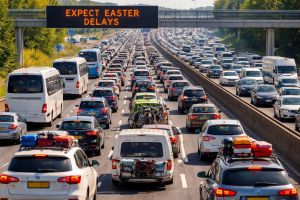
Motorists travelling over the Easter period can expect heavy traffic across South Africa’s road network, with authorities warning that routes to Limpopo will come under particular pressure as thousands of pilgrims make their way to Moria.
Many forward-thinking individuals propose that autonomous vehicles will improve road safety as problematic driver behaviour, which contributes to 90% plus crashes, will be eliminated. A recent incident may cause some to doubt this, however.
Motorists travelling over the Easter period can expect heavy traffic across South Africa’s road network, with authorities warning that routes to Limpopo will come under particular pressure as thousands of pilgrims make their way to Moria.